<span>Monthly Archives</span><h1>March 2015</h1>
    film art, music

    Johanna Billing, Pulheim Jam Session (2015)

    March 21, 2015

    billing2

    To be fair, all years have some groundbreaking music to recommend them. But 1975 was a good year for both jazz and urban planning in Germany. Who knew the two could go together?

    In Köln, Keith Jarrett played an improvised concert, the recording of which was to become the best-selling solo piano album of all time. Note the quibbling over genre, which can be found elsewhere.

    Meanwhile to the North West of the city, a communal reform pronounced 12 nearby villages to have become a single municipal entity. Pulheim was born and in 1981 became a city.

    Now, thanks to a new 23 minute film by Swedish artist Billing, improvisation and infrastructure have been married up again: a pianist plays in a barn, while 50 cars stage a tailback on a one-lane road.

    Applying herself to the baby grand is artist and musician Edda Magnason. She offers a soundtrack to the traffic situation which begins with some tentative vamping and builds to an insistent riff.

    The camera loves her instrument, the workings of which are juxtaposed with the engines of the cars, as, when the queue gets moving again, one driver helps another with a jump start.

    But this is one jam you might not want to end, even if it takes place in a landscape as monotonous as it is continental, with fields of sleeping corn and power lines hung like staves from pylons.

    It is only once the cars grind to a halt that their occupants come to life. Passengers play with dice. A father reads to his children. Dogs are let out to chase sticks. It’s all action in a major key.

    Back in the barn, we encounter film crew, lighting rig and the impossible sight of men loading the Bechstein onto a removal truck belonging to ‘Piano Express’. Easy on the ears, the music plays on.

    Plenty more sounds find their way in; the road users provide ambient noise. And Magnason takes regular breaks, allowing you to think about what you see just as much as what you hear.

    But ultimately, if you give it time, this film will sweep you away. It is at once totally mundane and yet life-affirming. Billing finds music in every visual detail, from smokestacks to litter in the kerb.

    Pulheim Jam Session enjoys its premiere at Hollybush Gardens, London, until 25 April. Read my 2009 interview with the artist here.

    contemporary art

    Wael Shawky, Cabaret Crusades (2010-2015)

    March 16, 2015

    shawky

    4000 years after their first use in Egypt, Wael Shawky has made marionettes a central part of his art practice, spooking the viewer with what some say is the oldest form of theatre.

    These puppets are not found objects. The artist has them made using glass and ceramic to render a cast of plenty, in period dress, who range from ethnic caricature to alien xenomorph.

    As destructible as a truce, these include more than 100 hand-blown glass marionettes made by the maestros in Venice, a city with its own minor role in the crusades.

    Shawky’s theme here is the millennium-old strife between Christianity and Islam or, more accurately, between Islam and Christianity. After all, those of Islamic faith were on home turf.

    But the drama is inspired by Arab accounts of the 11th and 12th centuries, when invading knights from Northern Europe waged a war - of varying degrees of holiness – in the Levant.

    Take for instance this account by Ralph of Caen: “In Ma’arra [today in Syria], our troops boiled pagan adults in cooking pots; they impaled children on spits and devoured them grilled.”

    Whether or not this grim moment appears in Cabaret Crusades, I can’t say. The new show in Doha is beyond my usual patch. But even on film, you sense these puppets are capable of anything.

    And this. As the 9th century rolled around, Baghdad was the most powerful and civilised place on earth with 1,000 physicians, free healthcare, regular post, working sewers and good water supply.

    The early Iraqis even had global banking, with several overseas bank branches in China. That’s kind of mindblowing, whereas what the invaders had was apparently chainmail and brutality.

    Such factoids are on almost every page of the book mentioned by Shawky in generous interviews: The Crusades Through Arab Eyes by Amin Maalouf. It’s highly recommended.

    Art also figures in this reprehensible past. Upon witnessing the siege of Acre in 1189, historian Ibn al-Athir reports the use of a painting of Muhammad beating Jesus: “to incite people to vengeance”.

    Cabaret Crusades is unlikely to inspire fanaticism on either side. But what the puppets may well tell you clearly that history is full of treachery, intrigue and reversals of fate.

    So if in recent years you’ve been surprised or indeed exasperated by inconsistencies in US and UK foreign policy, look upon these fragile, mutually dependent figures and realise it was every thus.

    Wael Shawky: Cabaret Crusades and Other Stories can be seen at Mathaf: Arab Museum of Modern Art, Doha, until 16 August.

    This interview with Shawky and clips of the action is well worth a look.

    aggregation, contemporary art

    UK Exhibitions: March 2015

    March 1, 2015

    MS-Cantata-Profana-2010-2-1182x787

    I’ve been picking a monthly round up of art for a few years now, first on Culture24 and now on criticismism. If it’s not my imagination, this is getting more difficult. Cuts coming home to roost?

    It’s my unscientific impression galleries have got less likely to list forthcoming shows. It could be a sign they’re having trouble planning, or that they’re at least lacking web resource.

    That’s to say nothing of the quality of what’s on offer. But fortunately, it remains a tricky operation to choose a shortlist from the wealth of UK exhibitions. Anyhow, FWIW, as ever, here goes:

    Group Therapy: Mental Distress in a Digital Age, FACT, Liverpool, 5 Mar – 17 May. New group show connects the technology which structures our lives with the mental illness which sometimes blights them. 15 artists provide a chance to reflect on the new psychological landscape.

    Leonora Carrington, Tate Liverpool, 6 Mar – 31 May. Too much to say about Carrington in this narrow window, but unfamiliar visitors may thrill to her surreal work, her remarkable life story, and her diversification into poetry, scultpure, tapestry and theatre design.

    Gerald Scarfe: Milk Snatcher, The Thatcher Drawings, The Bowes Museum, Co. Durham, 14 Mar – 31 May. With a general election on May 7, this is a brave moment for a museum to remind us of the evils of Thatcherism. And, with recent events in Paris, the power of political cartoons.

    Richard Diebenkorn, The Royal Academy, London, 14 Mar – 7 Jun 2015. Heralded by US papers as a painter of superlative gifts, the forthcoming show – Dieberkorn’s first in the UK for 20 years – is an opportunity to be seized. The RA promises a career long survey.

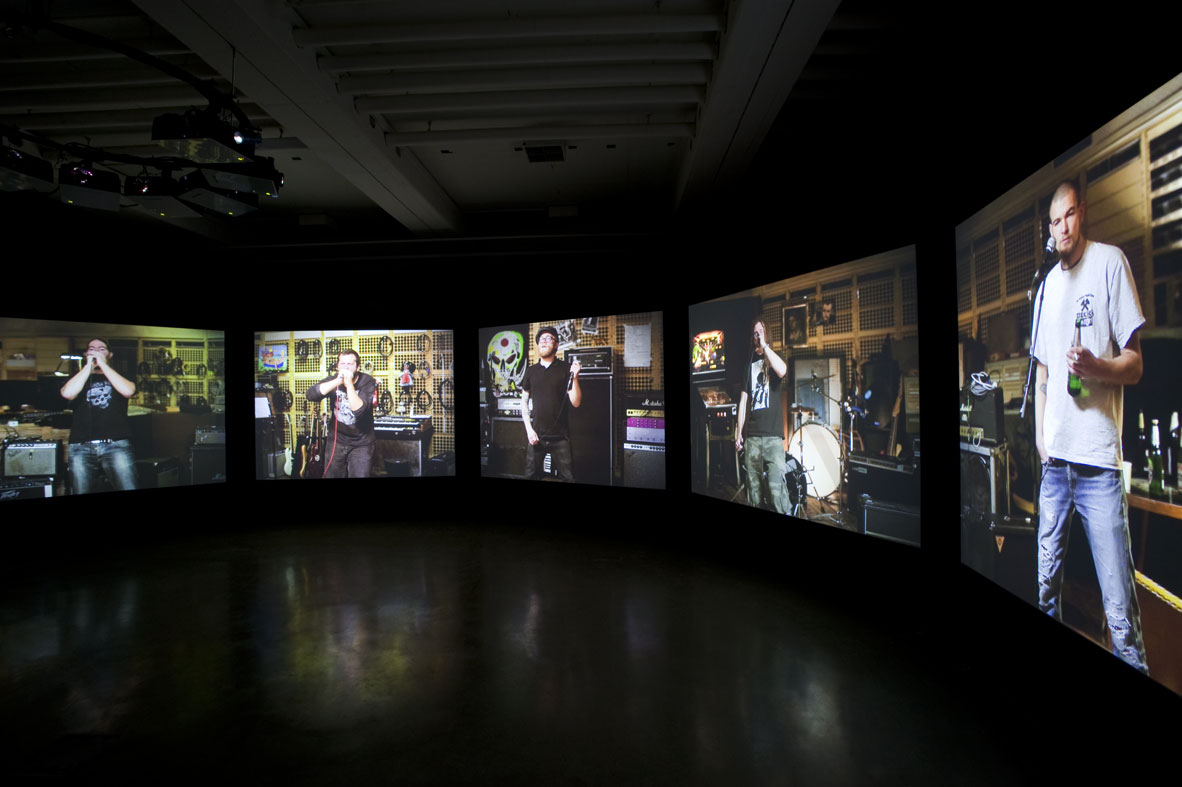
    Matt Stokes:  Cantata Profana, Dilston Grove, Southwark Park, London 27 Mar – 26 Apr. Grindcore metal meets choral composition in an offsite six-channel installation for Matt’s Gallery. Find yourself immersed as the volume goes up to (a no doubt cathartic) eleven.