Browsing Tag: art

    graphic novels, Uncategorized

    Branded discontent: Tîn Droi by Bedwyr Williams

    November 28, 2025

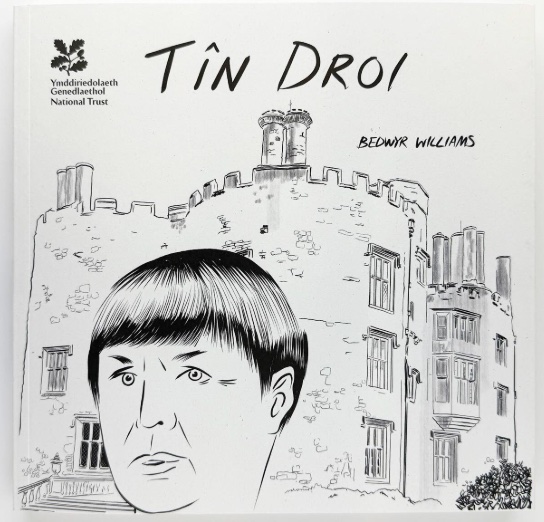
    Can creative content be art? This question worried me as I picked up Tîn Droi by artist Bedwyr Williams. This book is published by the National Trust, commissioned by National Trust Cymru and promotes National Trust properties in Wales. So, I asked myself, whose beloved property is the end product?

    The National Trust has had long association with artists, who generally emerge with their integrity in tact. Although conservative with a small ‘c’, they don’t make bombs or robotic soldiers: a good patron, then, much better in fact than, say, the Borgias.

    But the Welsh artist is a prickly art world figure who, through longstanding use of a viral Instagram feed, has been using iPad drawings to satirise peers, along with the English, curators, second home owners, wearers of trendy footwear and, occasionally, writers. ‘No one is safe,’ observed an artist friend.

    That IG feed is frequently hil.arious. In a style that is perfectly suited for the graphic novel he has now produced, Williams has developed a strong roster of characters and provides access to their inner lives. What they can smell, what they try to imagine, what makes them insecure but also too  frequently what they hate. This contempt is absent from Tîn Droi. It would have to be.

    The number of characters developed by Williams must number around two dozen by now. This book is a development of just two: a female airbnb cleaner and a male, plus size fashion victim. The longform was at first boring; no one to laugh at here/too much unpopulated scenery. But this unlikely collab, between a misanthropic bard and the marketing dept of a patriotic charity, ultimately works and goes deep.

    Spending extended time with the cleaner as she judges and vapes softened me towards her. She is a curious, isolated woman, with a past of her own, searching for her place amidst these ruins. At the same time the ‘Man who absolutely loves clothes’, who has always made me chuckle into my phone, now has my sympathy. He too has enough love of life to get out and around to these historic properties. 

    And as if taking a break from showing masochistic cultural workers how the rest of the world sees them, via Instagram, Williams uses these 160 pages to show a heritage audience how two everyday people might see places of historic interest. 

    There are few dates, events, names or other historical facts. There are instead details you might at times overlook, from signage to cattle grids, tombstones to bench plaques, graffiti, electrical fittings, statues wrapped for winter, and of course the occasional antique. Perhaps by way of a nod to the origins of the project there are also plenty of smartphone interactions.

    Rather than Can content be art? the question becomes Can art be content? On the evidence of this book, it is both content and discontent. In William’s intimate and honest audience survey — for a sample of two fictional characters — the customer satisfaction levels are ambiguous. That incalculability reflects well on both artist and client.

    Tîn Droi is available for £14.99 here. Bedwyr Williams can be found on Instagram here. And there is a launch at Galeri Caernarfon on 5/12/25 at 6.30pm. The book’s protagonists might be there, in spirit at least.
    Uncategorized

    Commons – a film by David Blandy

    November 6, 2025

    Can an artist activate items in a museum collection, or do those items activate the artist in turn? 

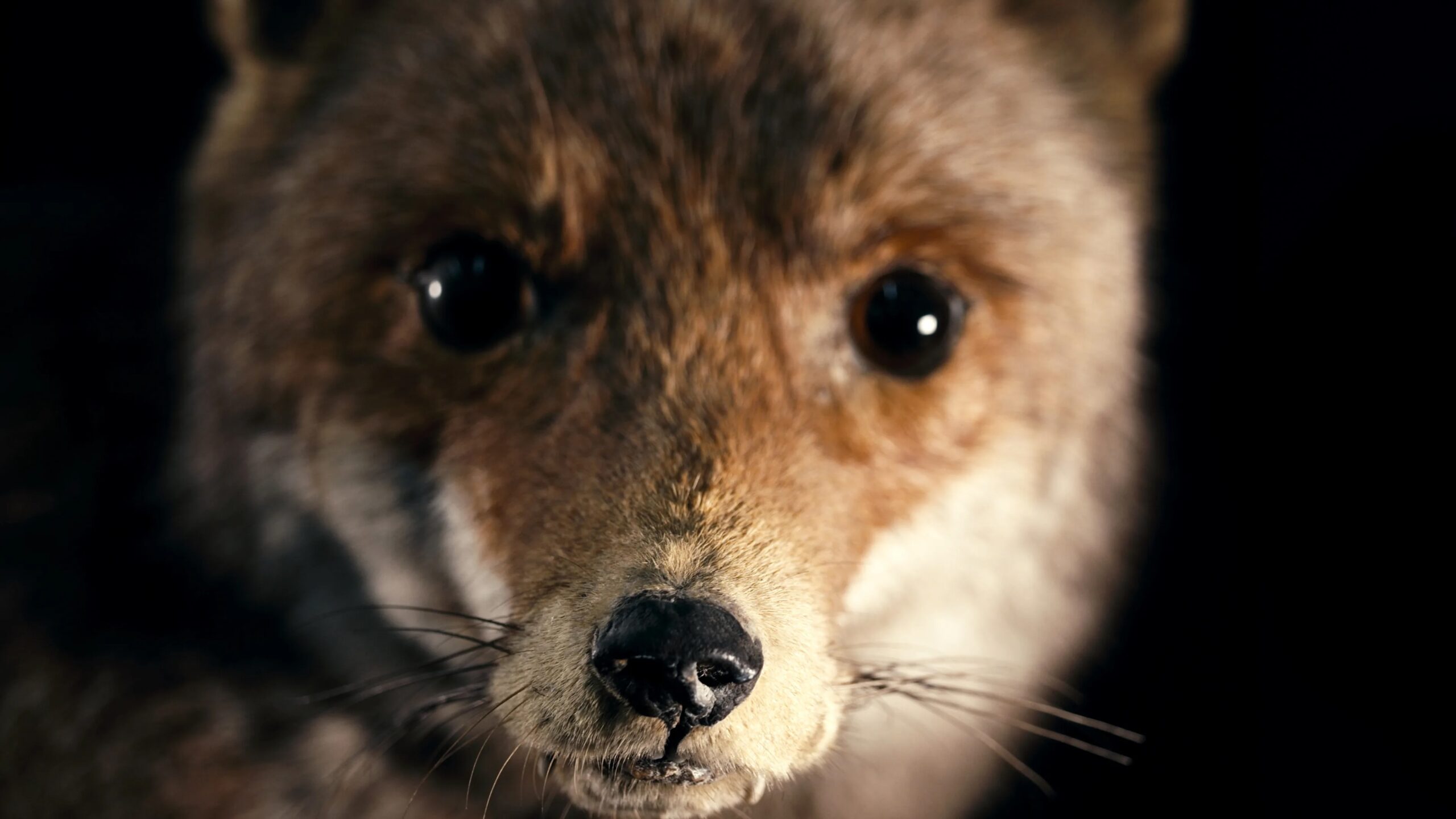
    At the Amelia Scott Civic Centre in Tunbridge Wells, a rook, a fox, a kingfisher, a crystalline rock and a dinosaur bone have all triggered a new work by David Blandy. Each of these artefacts has been removed from a vitrine, filmed in a studio, and given a thought-provoking script and VO. In this way, you might say, they have also given the artist a voice, certainly a vision.

    Taxidermy animals have an unusual status. They retain a preserved appearance, but they are dead. They let you get really close as a result, and they have those glassy eyes, which you will never look into in the wild. As they rotate, up close, against a cosmically-black background, in a black box viewing space here at the Amelia, they are, dare I say it, even a little bit comic. But are we not the funny ones for having once gutted these beautiful creatures and sewn stuffing into their feathers and fur?

    There’s quite a lot of talk these days about objects having agency, stones having consciousness, rooms having memories and so forth. But if talking immobile, unbreathing, non-reproductive entities as having being, then a museum is a great place to test that. (A film such as Night at the Museum is an exaggerated narrative sure, but it does illustrate an imaginative truth for theories about artefacts and their souls.)

    Blandy might be pulling in allusions to the Canterbury Tales, that local epic, and this genteel town’s grazing lands in common ownership, as if the rook, the fox, the kingfisher, the rock and the bone have travelled here though space and time to carry one of the artist’s stories of post-apocalyptic recuperation. Except that this story could not have been told in this place without a very living collection of natural history and prehistory.

    Shared commons, shared pasture, shared nature and, as the film puts it, ‘common knowledge’ and ‘common wealth’ are the ideas we need right now, as the climate collapses and the chickens of private ownership are coming home to roost.

    Museums like the Amelia, with their impulse to share collections with then widest possible audience, are an enduring part of that ideal dynamic. I think that might be true to the extent that in this case a museum has operated as a medium for several characters, animal and mineral, to call out for an artist to tell their tale.

    Commons illustrates how the holdings of a museum have a certain grip on the institution, and any artists invited to work with them, in turn.

    David Blandy’s work can be seen at the Amelia Scott in Tunbridge Wells until 11 January 2026.

    Uncategorized

    Drawing the line somewhere: writing for free about art

    September 7, 2016

    untitled blog

    Art Rules was a shortlived online experiment from the ICA and in 2013 I was one of many people asked for some wisdom. “Don’t plan on getting paid or laid,” I wrote. “The work is its own reward.”

    Well, Lucky pdf, an arts collective who are much cooler than me, wrote “Don’t work for free”.  But I would contend we both have a point. The work is its own reward, yet has monetary value.

    That is in essence the beauty of both writing and art. Surely nothing worthwhile is ever made with a price tag in mind. And so the art world is as full of freebies as it is full of art fairs and auctions.

    We need hardly enumerate the perks of engaging with this system: free admission to galleries, free wine at openings, free press releases, free selfie opportunities and free reviews online.

    Then a middle tier: blockbuster shows cost up to £20; catalogues can cost even more; editions will set you back three figures. But all of the above augment a pleasant middle class lifestyle.

    The gateway comes next: work by ‘name’ artists costs between the price of a car and a house; at auction, you could spend millions; if accepted as a collector you’ll become an art world VIP.

    At this point you may want to loan one of your works to a museum, thus increasing its value. Or you may want to bequeath all your art to a provincial gallery, ensuring immortality: a good trade.

    Artists themselves meanwhile have to speculate to accumulate. At the very least they will need to buy materials. At worst, for their pockets, they’ll manage to rent a studio or hire assistants.

    Journos can get by with a laptop, a pad and a pen, and a voice recorder. Utilised to our advantage these will gain enviable invitations to press launches and press trips.

    After that point, whether visual artist or art writer, you will want to sell work. This is as difficult as it sounds. We are legion and there are always pre-validated colleagues out there with more talent.

    So I found myself coming back to that pearl of wisdom from Lucky pdf. It struck me as quite an important principle. Giving away art or giving away writing does no one any favours, surely.

    And yet we have social practice, a genre of art which thrives off what is freely given. And yet we have blogs like this one, which never make a bean.  And on social media, every darn thing is free.

    I guess that moving forward, the approach should be: don’t give away more than you earn. Be you an artist, writer or curator, you should try and come out of your professional activities in the black.

    With that in mind, it’s worth considering a new phenomenon: the crowdsourced gallery guide. Back in August I was invited by one of these to volunteer some commentary for a current London show.

    The email, from a Michael Bouhanna from Untitled, captured my imagination because the featured artist was Jeff Koons and the gallery was Damien Hirst’s. I have written on both, but who hasn’t?

    It can’t even be said that the request came from either of the two great men. This untitled gallery guide was positioning itself as a public service, as a kind of digital intervention.

    This was supposedly in response to the lack of clear interpretation which goes along with some of the work in Hirst’s personal £100 million collection of art shown in his purpose built gallery.

    But no matter how frequently I have worked for free, to promote myself or support an artist, I would never for a moment think that the Murderme collection or Newport Street Gallery needed my help.

    In return Bouhanna offered the chance to join  a community of ‘passionate’ art enthusiasts who may or may not attain VIP status at future shows or art fairs. That doesn’t really appeal.

    Indeed I found more community belonging on my Facebook wall where, being a blogger of the passive aggressive variety, I eventually cropped up to share my dismay at this cheeky request.

    Writer Ben Street and artist Paul Brandford, who are both already VIPs to me, soon reported having similar experiences with Untitled. Bouhanna clearly spread his net far and wide.

    The guide itself later arrived. One wonders if he paid the designer. Punters might be better off reading a broadsheet review and/or Mr Koons’ Wikipedia page.

    The episode just threw into relief a truth about the market in which art finds itself. The rich get richer and sometimes it gets rich off studio assistants, interns and on occasion art bloggers.

    But the wonderful thing about blogging is this: you can pick or choose what you write about. I hope Michael if you are reading, you will understand why I chose not to write for you.