Browsing Tag: Lascaux

    Uncategorized

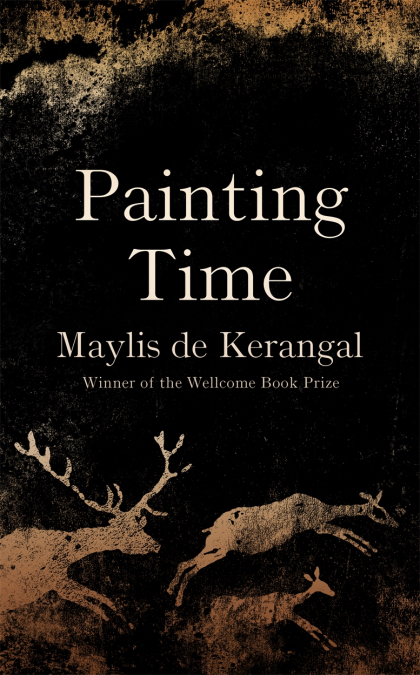
    Book review: Maylis de Kerangal, Painting Time, 2021

    June 4, 2024

    Listing shades of pigment is as writerly as mixing shades of pigment is painterly. Maylis de Kerangal appears to have a handle on both disciplines as she builds the tale of Paula Karst, across a number of well-set scenes in the theatrical world of tromp l’oeil art. 

    We first meet the protagonist in Paris. We soon flash back first to art school in Brussels, and then to the studio lots of golden age Italian cinema. Then onwards to Montignac in the Dordogne, where Paula is put to work on the latest €57m replica of the prehistoric cave of Lascaux.

    Painting Time is atmosphere driven rather than plot or even character driven. Therefore it is no spoiler to say that in Montignac she closes in on the essence of at least two aspects of art: the creation and the copy. The Lascaux section (which occupies the final 50 or so pages of this slim novel) is meditative, a discussion about the meaning of parietal works, which dispenses with the usual theories about the role of the paintings in this famous grotto in favour of a mysterious question mark. which preserves them in all their part faded glory.

    But while the prose turns as purple as, well, the small patch of mauve colour which, in a world of black and ochre, is unique to Lascaux, de Kerangal grounds her flights of description with deeply researched narrative around the history of the cave from rediscovery to replica. Everything known about Lascaux is here, from the teenagers who first explored the Hall of the Bulls, to the arrival of tourists, press and dignitaries. Various personages appear on the roll call, from the photographer from LIFE, Ralph Morse, to the priest who makes the first tracings, Abbé Glory.

    De Kerengal shades fact into fiction as she imagines herself into the studio where Paula and her fellow copyists paint the cave’s famous bestiary without having seen the original. While the Lascaux hillside is visible from the window of her room, when she cycles up to the entrance, we find that not even the door is visible. De Kreangal does well to novelise the dry historical details surrounding attempts to conserve Lascaux, even making space to include Lascaux II and Lascaux III. “Little by little,” she writes, “The cave is no longer the object of copying, but has become the laboratory of the art of replicas”.

    Although Paula has friendships and relationships, such connections lead back to the art of tromp l’oeil. Foremost are two friends from her school in Brussels, Kate and Jonas: he becomes a fine artist; she gives up on her dream. In Rome, Paula has a lover, whose romantic track record has earned him the on-set nickname, The Charlatan. She befriends a make-up artist. Her team at Lascaux IV are like a family, thereby drawing her even closer into the heart of artistic creation.

    This is the fertile core of the book and the imagery pours forth from de Kerangal’s pages. She seeds the flint and the fire of prehistoric humankind very early on in this story. `She dwells on the renaissance. And one finds many more walks of artistic life within these pages. I’d recommend it to any painters or to any prehistorians, or indeed to anyone who has ever been transported by art.

    On a personal note, I was very taken with this 2021 novel since I’ve recently completed a PhD on representations of the French cave in question. As the book drew to a close, I felt I knew some of the writing on the metaphorical wall, as de Kerangal evoked detail after detail which suggested to me overlaps between our research. It was, yes, a bit like lighting a torch and seeing powerful forms, at once familiar and strange. An amazing reading experience, and I’d love to hear from anyone who reads this book or has already done so.

    Posted with thanks and great respect to Memo and Ana, who discovered this book and so kindly sent me a copy!
    Uncategorized

    Visiting Lascaux II

    July 24, 2019

    unnamed-5

    [author’s photo]

    In my last post I promised to note the lighting arrangements in Lascaux II. Well, I went to inspect them today, and, as it happens, I was not disappointed.

    The tour began with a couple of gloomy exhibition spaces. But already it was clear that the cave’s original replica (indeed, ‘original replica’) was to be a more earthy, some might say chthonic, experience. And whereas the guide at Lascaux IV was armed with a slick laser pointer, our guide at Lascaux II used a battered flashlight. This says plenty about the difference between the two experiences. And yet, there was more.

    Before we entered the artificial painted grotto, our guide disappeared on some pretext. We were left alone for maybe three, four minutes. He returned with an actual flaming torch. This delighted young, old, and me, alike. So we ventured onwards.

    Once inside the Hall of the Bulls, the flame was all we had to go on, as our guide stoked up the air of mystery and illuminated bovine form after bovine form.

    But having established we were ‘not afraid of the dark’, he extinguished the torch, and brought up the house lights. It was still not as bright as Lascaux IV. The ochre yellows were not as cheerful. The rock appeared more abrasive. The art somehow looked more monumental. Were we at closer quarters with the art? It seemed that way. The passage through the Diverticule axial was certainly more narrow, more dramatic.

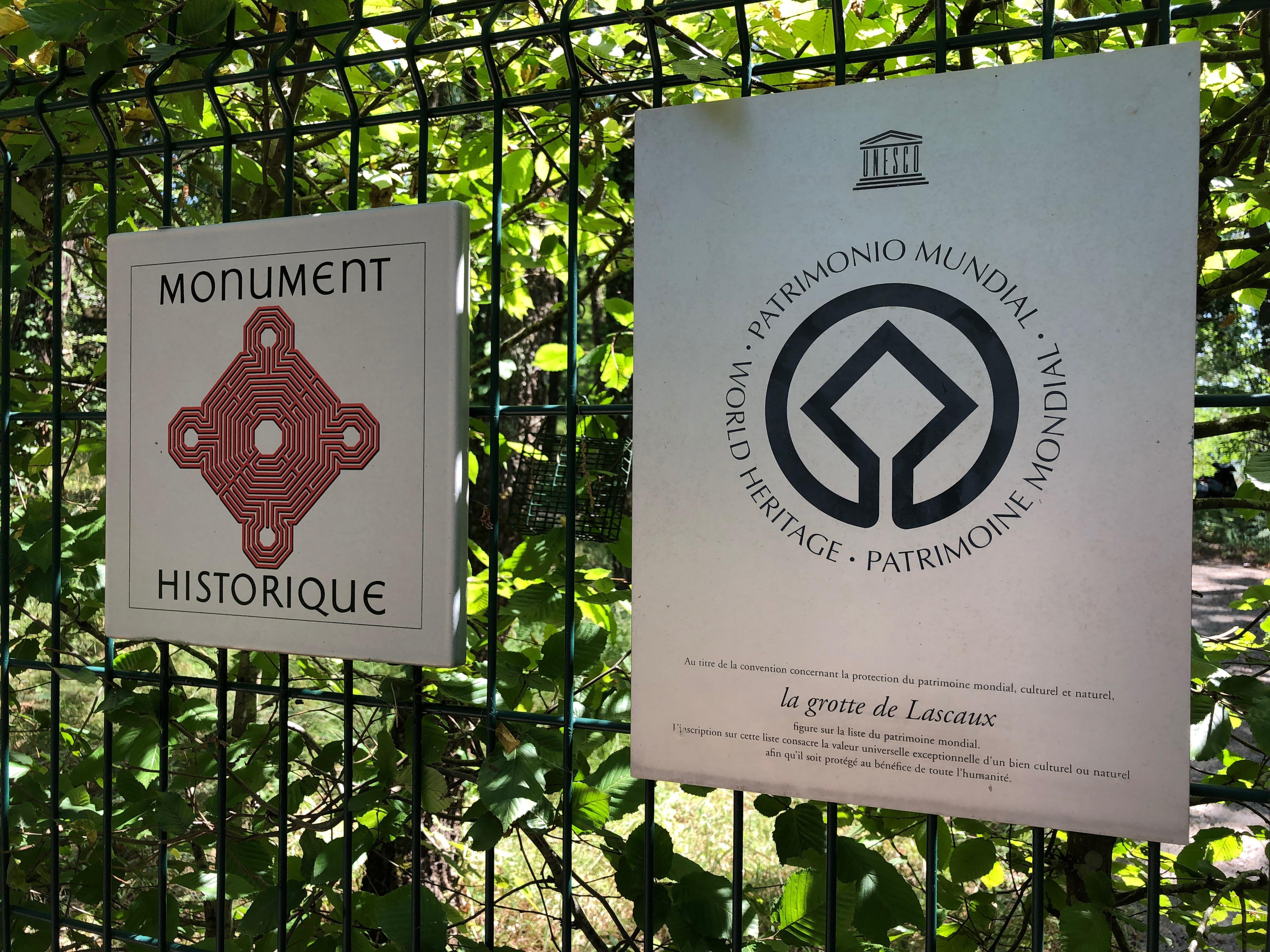
    To compare Lascaux II and Lascaux IV will prove interesting. I’m glad I made the hike, (one mile uphill in 37 degree heat). I climbed a bit further to take a peek at the entrance to the real Lascaux. You can just about make out the steps. Barbed wire, sight-blocking hedges, and private property notices, seem like a strange afterlife for the most famous cave in the world.

    prehistoric art

    The faux pas of primitivism

    July 16, 2019

    14474428405_5f5969f519_b

    “Lascaux 170”by Ma Boîte à Image is licensed under CC BY-NC-SA 2.0

    In post war France, prehistoric art got people talking. At least it got intellectuals talking, but this being France we can imagine that the zone of interest was widespread. The basis for this post, about primitivism in the years following the Second World War, is an important paper by Douglas Smith called Beyond the Cave.

    While many in France thought they’d found the origins of humanity, three figures called into question the simplicity of that conclusion: Georges Bataille, Maurice Blanchot and René Char. Smith quotes poet Char on the dubious quest for orgins: “Cette espérance de retour est la pire perversion de la culture occidentale, sa plus folle aberration.” (This hope of going back is the worst perversion of western culture, its maddest aberration.) But all three writers complicate the notion of origins. They assert, in various ways, with critical subtlety, that the works at Lascaux are both origins and originary non-origins. Bear with it.

    Smith concludes that Lascaux was indeed an ‘impossible origin’, given the efforts of the parties who wanted to find the descendants of the modernist White Cube in the Hall of the Bulls. This was the general idea behind the second wave of primitivism in French culture in the 1940s and 1950s. In the first wave, modern artists looked to exotic cultures for the origins of modernism. But now, figures like artist Jean Dubuffet, photographer Brassaï, and architect Le Corbusier were taking inspiration from the indigenous primitivism of prehistoric art, as if the first artists were already modern without realising it.

    Writer, politician and former Resistance fighter, Andre Malraux claimed that the caves at Montignac were used as an arms cache for his comrades in arms. Lascaux was thought to be a place of anachronistic goodness. This was to ascribe a spurious innocence to prehistoric art, in the face of the guilt which humanity shares in the wake of Auschwitz and Hiroshima.

    heritage, paleolithic art

    Lascaux: an intangible monument

    July 4, 2019

    31904812727_491a2bde66_b

    I’ve been reading an essay by Rosemary J Coombe about world heritage in an age of neoliberal politics.

    Whereas a monolithic state may once have strived to preserve monumental artefacts and artworks of supposed universal appeal, we now have a web of agencies both within and outside of government that connect around artefacts that may not even be tangible.

    Efforts to preserve a rare language or a local cuisine are now validified, and the actors who lobby to give them listed status with UNESCO World Heritage Sites, are as likely to be from the community as from the corridors of bureaucratic power, or so it is hoped.

    Intangible cultural heritage even has an acronym (ICH) and ICH has comprised many of the efforts of a 21stcentury UNESCO, in a bid to redress the 19thcentury bias towards Western Europeans which ‘monumental heritage’ is said to represent.

    • But what about a monument which is 20,000 or even 40,000 years old? Is it possible to ‘inherit’ culture which predates written history?
    • If Lascaux is closed to the public, and virtualised in the form of digital reproductions and multiple nearby replicas, how tangible do the original caverns become?
    • And given the little we know about correlatives to the parietal art (which many believe included storytelling, music and/or dance), is Lascaux largely intangible? If so, do the caves represent lost ICH?

    Whatever the case, one cannot today conceive of Lascaux without UNESCO World Heritage Status. Even if it remains to be seen how the network of bureaucrats and heritage practitioners line up to support its preservation, presentation, and promotion around the world.

    The Minister for Culture may once have closed the caves to the public , but the arrangement in place to keep them closed is described by Coombe as an ‘assemblage’ of interests from the public-private, local-national-and-global joint ventures who compete and collaborate to manage the site at Montignac.

    Prehistoric parietal art, Uncategorized

    How French is Lascaux?

    June 27, 2019

    cheese and salami

    In a hypothetical word association game, I predict that food, the Eiffel Tower and the Mona Lisa would all get a mention long before Lascaux. The cave at Montignac seems French only insofar as a specimen of moon rock appears to be American.

    Today I was reading about the heritage industry and wondering just who might be the heirs to Lascaux. Surely it was once recognisably ‘French’. Indeed it is said to have been a prop in the post-war rebuilding of the nation. See Douglas Smith (2004) on the New Primitivism of the 1940s and the 1950s and the reconciliations of Lascaux, modern art and tradition.

    But now, sealed off, and replicated several times, the 17,000 year old cavern resides on a UNESCO list of Sites of Outstanding Universal Value. It belongs to us all, in theory. But this ‘world heritage’ status is ironic given that only a handful of scientists see Lascaux first hand.

    If we are heirs to the world’s first art, we have to put up with the idea that it is held in trust for us in perpetuity. Easier to inherit the intangible pleasures of French gastronomy, be you French or not, than the mysterious paintings of Lascaux, so hard to domesticate.