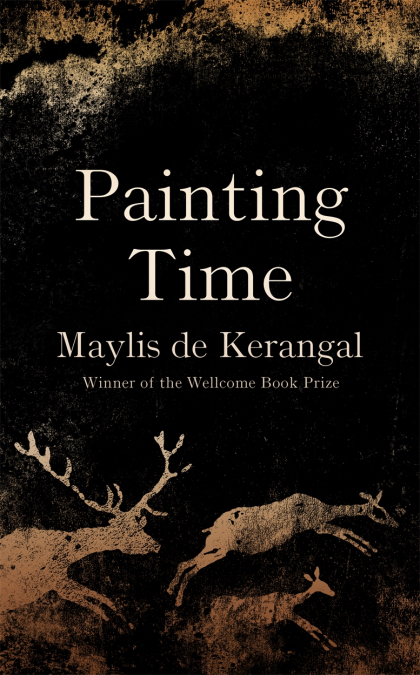
Listing shades of pigment is as writerly as mixing shades of pigment is painterly. Maylis de Kerangal appears to have a handle on both disciplines as she builds the tale of Paula Karst, across a number of well-set scenes in the theatrical world of tromp l’oeil art.
We first meet the protagonist in Paris. We soon flash back first to art school in Brussels, and then to the studio lots of golden age Italian cinema. Then onwards to Montignac in the Dordogne, where Paula is put to work on the latest €57m replica of the prehistoric cave of Lascaux.
Painting Time is atmosphere driven rather than plot or even character driven. Therefore it is no spoiler to say that in Montignac she closes in on the essence of at least two aspects of art: the creation and the copy. The Lascaux section (which occupies the final 50 or so pages of this slim novel) is meditative, a discussion about the meaning of parietal works, which dispenses with the usual theories about the role of the paintings in this famous grotto in favour of a mysterious question mark. which preserves them in all their part faded glory.
But while the prose turns as purple as, well, the small patch of mauve colour which, in a world of black and ochre, is unique to Lascaux, de Kerangal grounds her flights of description with deeply researched narrative around the history of the cave from rediscovery to replica. Everything known about Lascaux is here, from the teenagers who first explored the Hall of the Bulls, to the arrival of tourists, press and dignitaries. Various personages appear on the roll call, from the photographer from LIFE, Ralph Morse, to the priest who makes the first tracings, Abbé Glory.
De Kerengal shades fact into fiction as she imagines herself into the studio where Paula and her fellow copyists paint the cave’s famous bestiary without having seen the original. While the Lascaux hillside is visible from the window of her room, when she cycles up to the entrance, we find that not even the door is visible. De Kreangal does well to novelise the dry historical details surrounding attempts to conserve Lascaux, even making space to include Lascaux II and Lascaux III. “Little by little,” she writes, “The cave is no longer the object of copying, but has become the laboratory of the art of replicas”.
Although Paula has friendships and relationships, such connections lead back to the art of tromp l’oeil. Foremost are two friends from her school in Brussels, Kate and Jonas: he becomes a fine artist; she gives up on her dream. In Rome, Paula has a lover, whose romantic track record has earned him the on-set nickname, The Charlatan. She befriends a make-up artist. Her team at Lascaux IV are like a family, thereby drawing her even closer into the heart of artistic creation.
This is the fertile core of the book and the imagery pours forth from de Kerangal’s pages. She seeds the flint and the fire of prehistoric humankind very early on in this story. `She dwells on the renaissance. And one finds many more walks of artistic life within these pages. I’d recommend it to any painters or to any prehistorians, or indeed to anyone who has ever been transported by art.
On a personal note, I was very taken with this 2021 novel since I’ve recently completed a PhD on representations of the French cave in question. As the book drew to a close, I felt I knew some of the writing on the metaphorical wall, as de Kerangal evoked detail after detail which suggested to me overlaps between our research. It was, yes, a bit like lighting a torch and seeing powerful forms, at once familiar and strange. An amazing reading experience, and I’d love to hear from anyone who reads this book or has already done so.
Posted with thanks and great respect to Memo and Ana, who discovered this book and so kindly sent me a copy!
