<h1>Archives</h1>
    graphic novels, Uncategorized

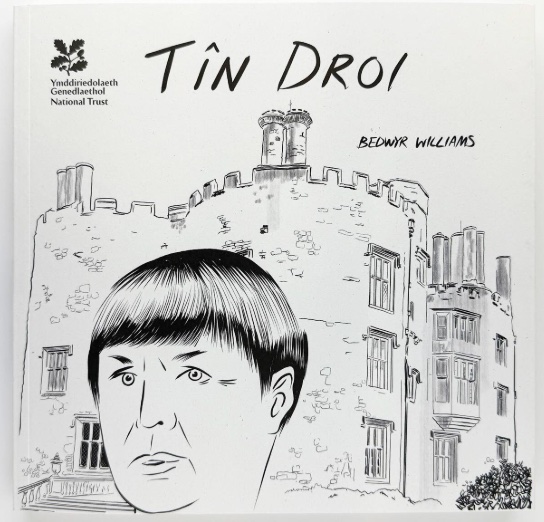
    Branded discontent: Tîn Droi by Bedwyr Williams

    November 28, 2025

    Can creative content be art? This question worried me as I picked up Tîn Droi by artist Bedwyr Williams. This book is published by the National Trust, commissioned by National Trust Cymru and promotes National Trust properties in Wales. So, I asked myself, whose beloved property is the end product?

    The National Trust has had long association with artists, who generally emerge with their integrity in tact. Although conservative with a small ‘c’, they don’t make bombs or robotic soldiers: a good patron, then, much better in fact than, say, the Borgias.

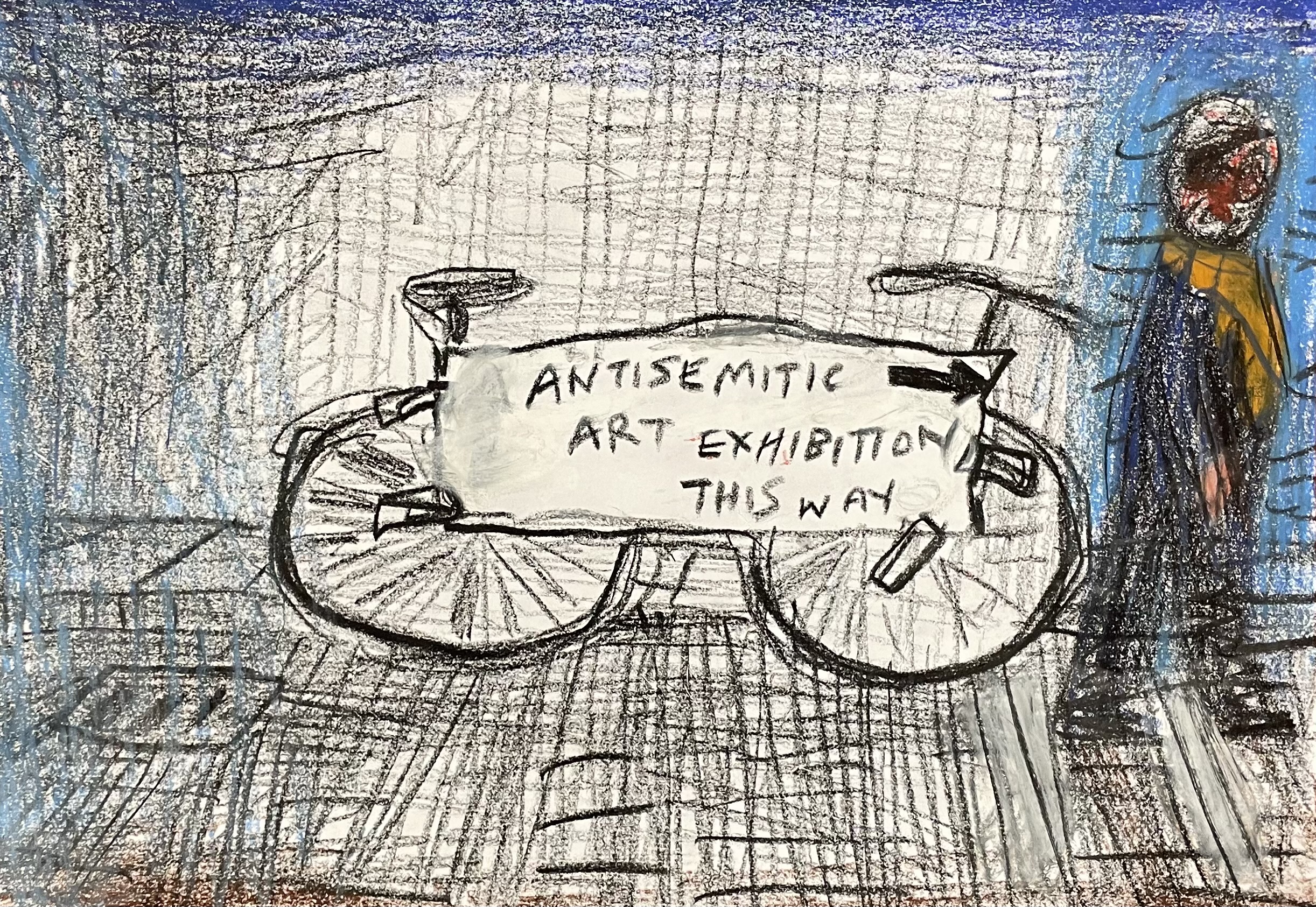
    But the Welsh artist is a prickly art world figure who, through longstanding use of a viral Instagram feed, has been using iPad drawings to satirise peers, along with the English, curators, second home owners, wearers of trendy footwear and, occasionally, writers. ‘No one is safe,’ observed an artist friend.

    That IG feed is frequently hil.arious. In a style that is perfectly suited for the graphic novel he has now produced, Williams has developed a strong roster of characters and provides access to their inner lives. What they can smell, what they try to imagine, what makes them insecure but also too  frequently what they hate. This contempt is absent from Tîn Droi. It would have to be.

    The number of characters developed by Williams must number around two dozen by now. This book is a development of just two: a female airbnb cleaner and a male, plus size fashion victim. The longform was at first boring; no one to laugh at here/too much unpopulated scenery. But this unlikely collab, between a misanthropic bard and the marketing dept of a patriotic charity, ultimately works and goes deep.

    Spending extended time with the cleaner as she judges and vapes softened me towards her. She is a curious, isolated woman, with a past of her own, searching for her place amidst these ruins. At the same time the ‘Man who absolutely loves clothes’, who has always made me chuckle into my phone, now has my sympathy. He too has enough love of life to get out and around to these historic properties. 

    And as if taking a break from showing masochistic cultural workers how the rest of the world sees them, via Instagram, Williams uses these 160 pages to show a heritage audience how two everyday people might see places of historic interest. 

    There are few dates, events, names or other historical facts. There are instead details you might at times overlook, from signage to cattle grids, tombstones to bench plaques, graffiti, electrical fittings, statues wrapped for winter, and of course the occasional antique. Perhaps by way of a nod to the origins of the project there are also plenty of smartphone interactions.

    Rather than Can content be art? the question becomes Can art be content? On the evidence of this book, it is both content and discontent. In William’s intimate and honest audience survey — for a sample of two fictional characters — the customer satisfaction levels are ambiguous. That incalculability reflects well on both artist and client.

    Tîn Droi is available for £14.99 here. Bedwyr Williams can be found on Instagram here. And there is a launch at Galeri Caernarfon on 5/12/25 at 6.30pm. The book’s protagonists might be there, in spirit at least.

    Uncategorized

    Commons – a film by David Blandy

    November 6, 2025

    Can an artist activate items in a museum collection, or do those items activate the artist in turn? 

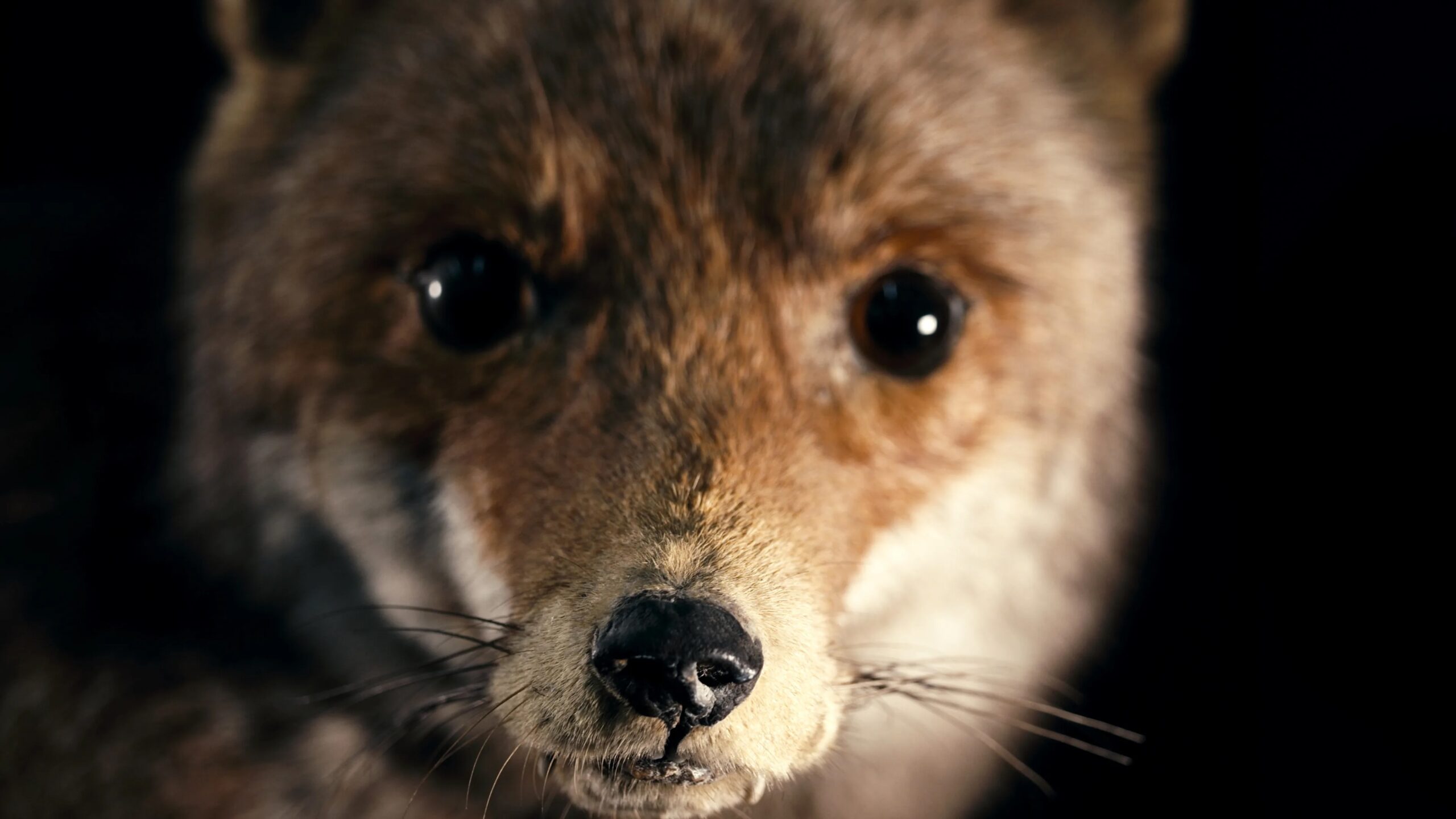
    At the Amelia Scott Civic Centre in Tunbridge Wells, a rook, a fox, a kingfisher, a crystalline rock and a dinosaur bone have all triggered a new work by David Blandy. Each of these artefacts has been removed from a vitrine, filmed in a studio, and given a thought-provoking script and VO. In this way, you might say, they have also given the artist a voice, certainly a vision.

    Taxidermy animals have an unusual status. They retain a preserved appearance, but they are dead. They let you get really close as a result, and they have those glassy eyes, which you will never look into in the wild. As they rotate, up close, against a cosmically-black background, in a black box viewing space here at the Amelia, they are, dare I say it, even a little bit comic. But are we not the funny ones for having once gutted these beautiful creatures and sewn stuffing into their feathers and fur?

    There’s quite a lot of talk these days about objects having agency, stones having consciousness, rooms having memories and so forth. But if talking immobile, unbreathing, non-reproductive entities as having being, then a museum is a great place to test that. (A film such as Night at the Museum is an exaggerated narrative sure, but it does illustrate an imaginative truth for theories about artefacts and their souls.)

    Blandy might be pulling in allusions to the Canterbury Tales, that local epic, and this genteel town’s grazing lands in common ownership, as if the rook, the fox, the kingfisher, the rock and the bone have travelled here though space and time to carry one of the artist’s stories of post-apocalyptic recuperation. Except that this story could not have been told in this place without a very living collection of natural history and prehistory.

    Shared commons, shared pasture, shared nature and, as the film puts it, ‘common knowledge’ and ‘common wealth’ are the ideas we need right now, as the climate collapses and the chickens of private ownership are coming home to roost.

    Museums like the Amelia, with their impulse to share collections with then widest possible audience, are an enduring part of that ideal dynamic. I think that might be true to the extent that in this case a museum has operated as a medium for several characters, animal and mineral, to call out for an artist to tell their tale.

    Commons illustrates how the holdings of a museum have a certain grip on the institution, and any artists invited to work with them, in turn.

    David Blandy’s work can be seen at the Amelia Scott in Tunbridge Wells until 11 January 2026.

    Uncategorized

    Matthew Collings at Handel Street Projects

    October 13, 2025

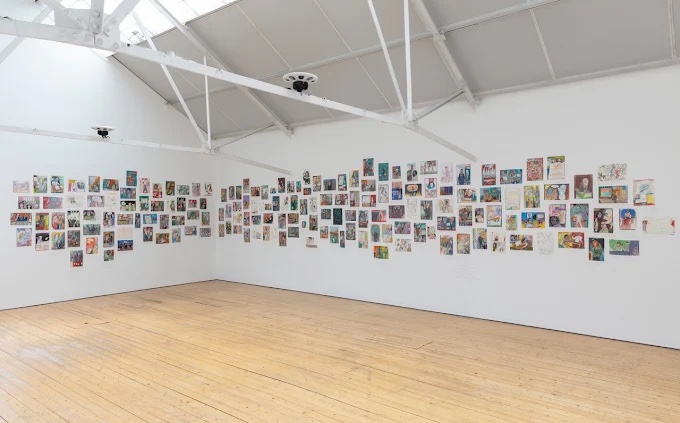
    On my way to Handel Street Projects, the bus passed Abbey Road. There were about two dozen tourists by the iconic crossing, staging photographs and re-enactments. A negotiation between drivers and pedestrians takes place all day here. It’s a scene of celebration of visual culture, which set the tone for me as I travelled to The Matthew Collings Holistic Art Experience, due to open that evening (on a visit I made on September 19). Having ascertained I wasn’t from the Telegraph or the Mail, the curator, Fedja Klikovac, and eponymous artist, Collings, were generous enough to make a little time for me to poke around a few hours before the PV.

    At the Marylebone gallery, I was led up an innocuous flight of stairs into a large gallery with four grey walls on which imagination and memory bring alive some 300 iconic scenes, with a cast of pop cultural figures, art historical figures and political actors posed for dreamlike snapshots from the pencil of Matthew Collings. These images fill the space, and look for any period of time and you will even see a Beatle or two. There are more characters than the cover of Sgt Pepper and the theatricality is just as vivid. Pop colours abound, but political messages, rather than cryptic ones are as black and white as they need to be in our times.

    The artist sat in one corner of the room, writing lengthy expository captions directly on the gallery wall. Collings was happy to break soon and to chat with me about all of this. I had never met him, but he was little different from his online self-presentation. Spectacle frames heavy enough to be serious when paired with Karl Marx-like beard. And, in a recent unfortunate development, a patch on one eye to combat the discomfort of Bell’s palsy. The artist was as welcoming as you hope him to be; not only does he keep some rarified imaginative company – with some very great artists and some very evil world leaders – he has a common touch.

    Let me just expand. There is a genocide in Gaza. There are fascists controlling the narratives on race in the UK. Trump is as mad as he is stupid. Contemporary artists are silent on issues which might hurt their careers. As a result there is no mainstream visibility for the ammoral billionaires and their hired friends in UK and American politics. In art we struggle with an absence of any cri-de-coeur masterpieces; there is no Picasso, Goya or Velasquez equal to the task of protest. The spirit of Philip Guston, who Collings tells me was perhaps our last great artistic social critic, has been confined by celebratory curators and museum people to the 20th century, with no notion of a KKK at work in America today.

    Collings is obsessed with the art world and manages to be an outsider and an insider at the same time. In past decades he edited an art magazine, presented art television, made abstract paintings with his partner Emma Biggs (which he might still be doing). When I ask about such entanglement with what he decries as a right-wing capitalist racket, he compares art world people to family, because you can’t choose them, and you might hate them, but you are part of them.

    With an ease of creating likenesses, a surreal gift for unlikely encounters, a sense of urgency that never lacks a sense of humour, Collings depicts an imaginary dynamics by which the famous dead, living celebs from art, music & literature, plus fiend-like political figures battle it out. The artist has described the exhibition as a portrayal of the content of his head, no more, no less. But if so, it is a landscape that feels both funny and familiar, not least because so many of these drawings have previously appeared on Instagram.

    But if I was expecting to get a sense of déjà vu from this exhibition, that was confounded. because each drawing here looks more richly and artfully executed in real life and the effect of hundreds of these across the entire gallery space is really overwhelming. I stepped into the space and uttered a word I had not anticipated from a crop of IG posts, “Wow!”

    I noted in the visitor book that Collings really has art world ‘surrounded’. I was not 100 percent sure who it was who ever was said to have said that they had America ‘surrounded’. Help me out in the comments if you know. But for me the phrase is a mad, ominous, messianic promise. Was it Timothy Leary or one of the Zippies? Either way it is an episode from twentieth century history of the ilk to be found in these historical drawings. These trenchant works, in this 360 degree space, have the capacity to turn heads and, I hope, change minds.

    The Matthew Collings Holistic Art Experience can be experienced at Handel Street Projects, London, until 24 October 2025.

    Uncategorized

    Dance like no one (else) is watching

    July 1, 2025

    In Pursuit of Repetitive Beats at the Barbican

    In 1989, a well-produced VR experience based on the current UK rave scene would have been unimaginable, and not only as a result of the technical limitations of the era. Acid house was an underground movement, with no clear potential for curatorial mainstreaming; warehouse parties were characterised by sweat and basslines, two earthy qualities which should not translate to what you might expect to be hands-off disembodiment and isolating virtuality.

    However, ‘In Pursuit of Repetitive Beats’ by artist Darren Emerson is enjoying an expanded world premier at the Barbican. Between now and August 3rd, you can, by booking in and checking in, see and feel how surprisingly well this piece evokes the excitement, danger, subversion, highs and MDMA-inspired camaraderie which led 1989 (or, some will tell you, 1988) to get labelled by the music press as the Second Summer of Love.

    The content below was originally paywalled.

    The technology is stunning. Along with a lightweight headset that fit easily over my glasses, the staff at Barbican were to kit me out (along with five other visitors) with handheld controllers and haptic vests. Suiting up was a little like dropping a pill: something was clearly going to take effect, but given all this unfamiliar, disorienting paraphernalia a possibility for things to go awry also concerned this reviewer.

    Perhaps I should foreground my own expectations for a moment. I was 16 in 1989, too young to join rave convoys, intrigued but ultimately wary of psychedelics. I stretched my curfew to attend two pop-up raves at repurposed venues within the city centre of Cambridge. And on Mill Road, I once witnessed a car passenger yell “Aci-eeeeeed!” at me as he sped by. It was mid afternoon.

    So my 60-minute experience at the Barbican, despite the distancing special effects of prosthetic tech and artificial vision, was to provide me with what are now my clearest memories of that culture, time, place and lifestyle. It was a journey and an education, but also a playful event, during which one felt only slightly stupid to be moving to the beat in a sensory black hole. Staff will be used to the spectacle of half a dozen silent disconauts vibing to an unheard tune.

    The experience was broken into chapters, and there is a real feeling of ‘coming up’ to the first of these. Using my handsets, I put a black 12” single onto a waiting Technics deck and, as the music took off, I was able to fly above the groove and then descend into the vinyl canyon and follow the stylus towards whatever might be in-store ahead. In another head-rushing sequence I was to find myself floating at high speed down a motorway at night. Then upon arrival at the rave there came an electrifying game in which, in co-operation with other visitors, we were able to capture a giant all-seeing eye with fizzing blue energy beams – Ghostbusters-style.

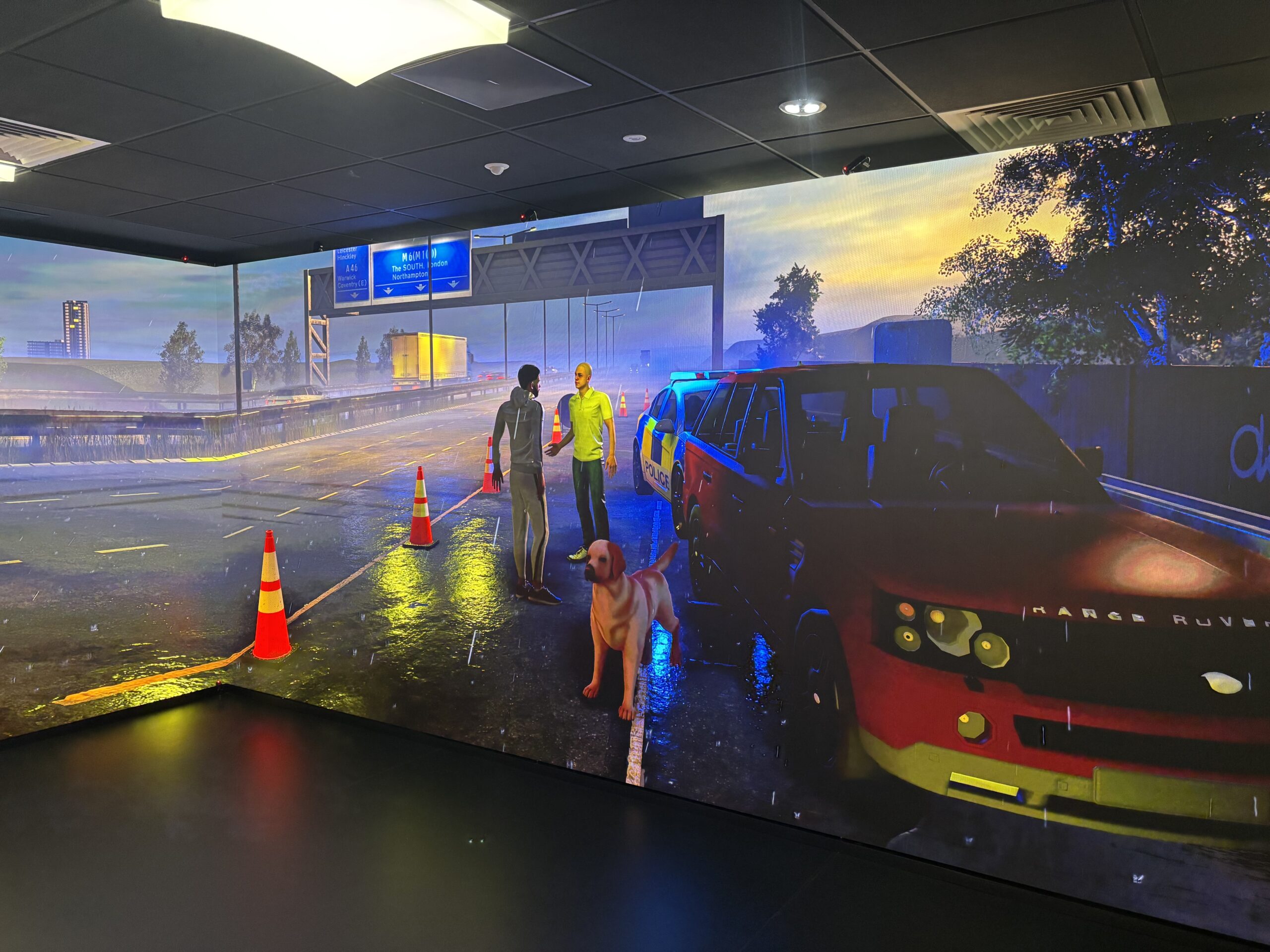
    Interspersed with these sensational moments are info-taining scenarios where, for example, one can join a trio of CGI mates, first at home in the early stages of a Friday night. As you explore the flat, rave fliers speak to you, spliffs are passed around, and EQ levels dance on the stereo. Or you can hang out by the red Golf, by a payphone at a service station: when it rings, you had better be ready to go. Or… in a moment which is quite a bad trip… you can find yourself helping West Midlands Police build up an incident map. But reflecting about my ten minutes spent in a drab police station office, I have to say that, as I was to pin photos and fliers to the map, it conferred glamour and notoriety rather than guilt and criminality on the party organisers.

    All of this scene-setting culminated with a party sequence. My handheld controllers became glow sticks and I began a mid-life shuffle. Thanks to the body suit, I was able to feel this party in the chest. Several nights like this during the late 80s could have transformed me, as they did so many people andI was within touching distance of a euphoria that might yet have changed my life. But in this case I could not forget my plastic ski grips, my fully-wired vest and my comfy but bewildering goggle set.

    Cue an elegiac epilogue in which one must gaze down on the aftermath as dawn breaks over the party-haunted fields of the rural midlands. This artwork offers a quasi-religious experience for those who were there at the time, an amazing opportunity to relive and reflect on the all too brief nights of youth. I would have liked, of course, to feel the same way. But protected from my fellow Tuesday morning ravers by a visual bubble, my hour-long re-introduction to a landmark moment in dance music culture was something of a voyeuristic one.

    The music was, and remains, great. Joey Beltram and Orbital tracks stayed with me for the rest of the week. But the VR rave experience is not really a case of ‘Dance as if no one’s watching’, as it must have been at a party like Amnesia at 3am. It is rather, ‘Dance as if you are not fully there’. The kit and the contrivance of it all rendered me actually quite shy about getting on down. But I still had to dance; one absolutely had to. It would’ve been unbearably stiff-necked to explore this subculture, to end up in a room full of shadowy bodies and light shows, yet remain stock still and unmoved.

    When I returned to reality I got talking to the visitor who had shared my quadrant of this virtual zone: he was a German veteran of techno clubs for whom this secret party phenomenon was equally distant. It’s not usual to leave an exhibition happily chatting to a stranger, but that is how I saw many people leave this particular show. It is a bit special that way.

    Does it deliver anything like the live experience? Not altogether. My actual memories, though limited, are a bit more visceral and wild. VR technology is by contrast slightly atomising and removed from the real. But as a museum ready presentation of a key moment in recent cultural history, there can hardly be an equal of Darren Emerson’s epic creation. Now if you’ll excuse me, I’m about to fire up an evil music streaming app and listen to the official playlist: to find my way into a past I can dream my way into if nothing else.

    Uncategorized

    Lab report

    May 8, 2025

    Reviewing Thomas Hirschhorn’s Laboratoire des Monuments Tombés

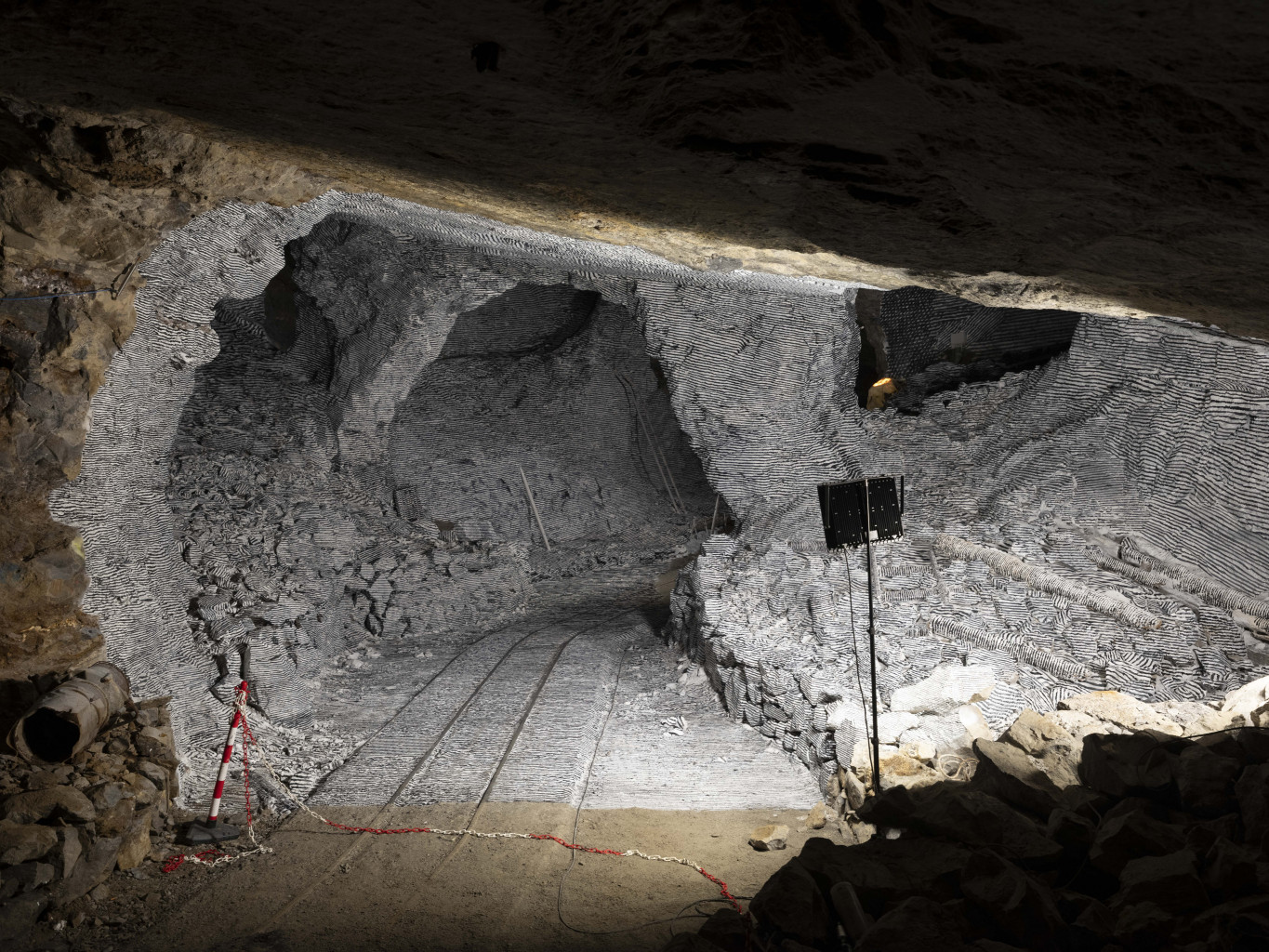
    That Thomas Hirschhorn should make an appearance in Caen was enough to provoke me to put family responsibilities aside and book a trip from Brighton, via Portsmouth. After six hours on the high seas, I was to arrive slightly dazed on Normandy shores, long after dark, armed with a code with which to find a room key, and lay my head down as a stranger in a strange land. The city of Caen was just far enough away that it might disorient, and the scale of the Swiss artist’s creation, was to confuse me even further.

    I was reading a curious 18th century text, Travels into Several Remote Nations of the World, better known as Gulliver’s Travels. And I was to find in Hirschhorn’s latest exhibition all it could take to magnify or shrink either the viewer or the reader. In six interlinked spaces I found trestle table islands in which small figures crowd around giant figures. The larger figures, though clearly devoid of life, are pinned down with cords in a way that echoes the opening part of of Swift’s strange novel. And as I gazed down at a crew of flat photographic onlookers, I felt that I too had arrived in Lilliput.

    Gulliver’s Travels may feel a long way from #BLM or the Arab Spring, but it is a fable set against the backdrop of colonialism in an age of exploration by sea with at least one direct reference to the plantations of America. The eponymous narrator is a ship doctor rather than slave trader, but as he endures one shipwreck after another the shifting scale of the first two sets of natives that he encounters calls into question not only colonialism but also the rightness of governance at home: the six-inch-high Lilliputian emperor is absurd; the 40 foot king of Brobdingnag is too lordly for the business of state craft; there are reason-loving horses in charge, on the final island on which he washes up. They too find an echo here, in an equestrian statue that also falls from grace.

    Like the wise equine Houyhnhnms with whom Gulliver would like to see out his days, Hirschhorn has progressive ideas; these emerges at times in written form. Previous installations have all featured a wealth of hand-scrawled maxims, slogans and quotes. For example, the Swiss artist has coined the maxim: “Energy, yes! Quality, no!” He based a show about vandalism and caves around the notion that “1 man = 1 man”. This exhibition in Caen does not break that mould. The artist is present, in the rough and ready sculptural construction, and the hundreds of placards which dot the landscapes he evokes or lie propped against plinth.

    These placards, no longer needed, range from the violent (“By any means necessary”, “Murder”, and “Killer”) to the sweetly wholesome (“Keep it cool”, “Tell the truth”, and “Wake up”) One feels that what has been at stake, what the laboratory isolates here, is humanity’s conflict between hate and love. The conclusion to this experiment appears in block capital scrawl on one of the largest placards: “A MONUMENT IS A WORK OF ART IF IT IS BASED ON LOVE. IF IT IS BASED ON DOMINION IT IS NOT A WORK OF ART!”

    It may seem perverse for a sculptor to present a show in which most of his plinths are starkly empty. The crowning bronzes, sketched out here in dark packing tape around crude cardboard frames, are all toppled, which is no surprise given the French title, as Hirschhorn has chosen the ongoing strike against statues for the premise of this aptly named ‘laboratory’ in Caen. There is a clinical dimension provided by the translucent plastic sheeting that encloses the visitor at all times and the plastic drapes, not unlike those which keep the temperature low in a cold store, must be pushed aside to move from one political spectacle to another.

    These Lilliputians are generic human forms, images found presumably online, printed and stood tall with the help of two-ply cardboard. Gigantic Gullivers are also here, by proxy, toppling off plinths as less desirable human types: the general, the dictator, the plantation owner or the confederate. Rope and cord heave at these mighty individuals and the viewer comes across the scene at the moment when, under lab conditions, the monument has fallen.

    I felt a little like a Brobdingnagian myself. I was also a giant who, secure in my size and strength, enjoyed some detachment from these scenes of human turmoil. This laboratory is at once stirring – you could get caught up in this mass movement – yet also didactic with a clarity that brings you calm.

    The felling of statues has been identified, as a movement which began in Algeria in 1962 – I knew this from Nicholas Mirzoeff’s important book on white supremacy and visual culture, White Sight: Visual Politics and Practices of Whiteness. From the North of Africa it spreads South, culminating in 2015 in post-Apartheid South Africa. In even more recent years attacks on monumental figures has reached the shores of Britain and the US. Yet we shall always have a long way to go. Mirzoeff informs his reader there are no less than 700 confederate statues on public land. It’s gonna take a lot of spray paint and rope. It’s also going to take plenty of courage. New legislation offers more protection to statues than you might expect for women, or the trans community.

    Mirzoeff finds a global network of statues so common as to be almost invisible. They construct an infrastructure of white supremacy. They seem to watch us, from on high. (And have not a new network of patriarchal and racist state actors, and tech oligarchs already placed us all under surveillance?) There is some obscurity, even anonymity, to certain historical figures which UK and US city planners opt for (Hirschhorn asks at one point with great pertinence, who to honour, “Qui honorer?”) And yet in some cases these impervious, immortal bronze goodly types have witnessed lynchings and ralllies, by the Klu Klux Klan for example, at their feet. Attacks on the statues themselves are more resonant than might be expected. With so much going on, it is little wonder that Hirschhorn wants to get all this evidence back to the lab.

    There was, however, nothing clinical about the 2014 success of the Rhodes Must Fall (RMF) movement. The downfall of this apartheid figure in supposed post-apartheid South Africa was messy. Protestors were to fling human shit at a controversial statue of Imperial governor Cecil John Rhodes, because access to sanitation is a live issue in S.A. Scenes closer to home from the BLM demo in Bristol, in which Edward Colston’s statue was to be torn down and cast into the sea, were also riotous. Hirschhorn, a very rational artist, finds these scenes rife for investigation.

    What he finds here and what he distils is rage. An RMF academic and activist Leigh-Ann Naidoo is quoted by Mirzoeff as saying: “The conduit of rage is awareness of another possible world in which that violence does not exist”. From anger to Utopia then, ours is a journey from captivity to freedom with parallels to that of Gulliver. Hirschhorn’s gallery of 2D spectators surround these scenes of desecration, and look on in static contemplation. They are a generic bunch, these some hundred onlookers, dressed for tourism or for hiking, not one keffiyeh or balaclava between them. The pint sized onlookers stand with us, to face the dawn of a new post statue world.

    This exhibition is an effective way of harnessing the insurrectionary power of ideas and collective action. The artist’s ambition has led to some notable staging posts on this redemptive journey. He may be a sculptor with a feel for the monumental, but his previous monuments – dedicated to the likes of Gramsci, Deleuze, Spinoza and Bataille – have all been gestures of ephemerality. Knocked up quick with plywood, packing tape, plastic sheeting and armies of interested locals, they emerge for a period and then disperse leaving a glimpse of a better world.

    No one could deny that these temporary monuments, very often habitable, sometimes puzzling, always curious, have been made with love. It is equally clear that civic orders to install hundreds and hundreds of weighty portrayals of colonial figures across the Global North have nothing to do with art. Any violence needed to tear down a civic monument has the rough and ready energy that Hirschhorn seeks in all his work. What comes next is up to us? Not all the lab results are back yet.

    I slipped through the final set of clear plastic drapes and wandered back through the gallery. The streets of Caen looked undisturbed by the staging of these six miniature uprisings. But I think I’m now contaminated by hazardous lab material, or overseas ideas, like those met by Gulliver; I find myself anticipating more monuments tombés. I will look out for them everywhere now.

    Laboratoire des Monuments Tombés is at L’Artothèque, Caen, until 7 June 2025.

    Uncategorized

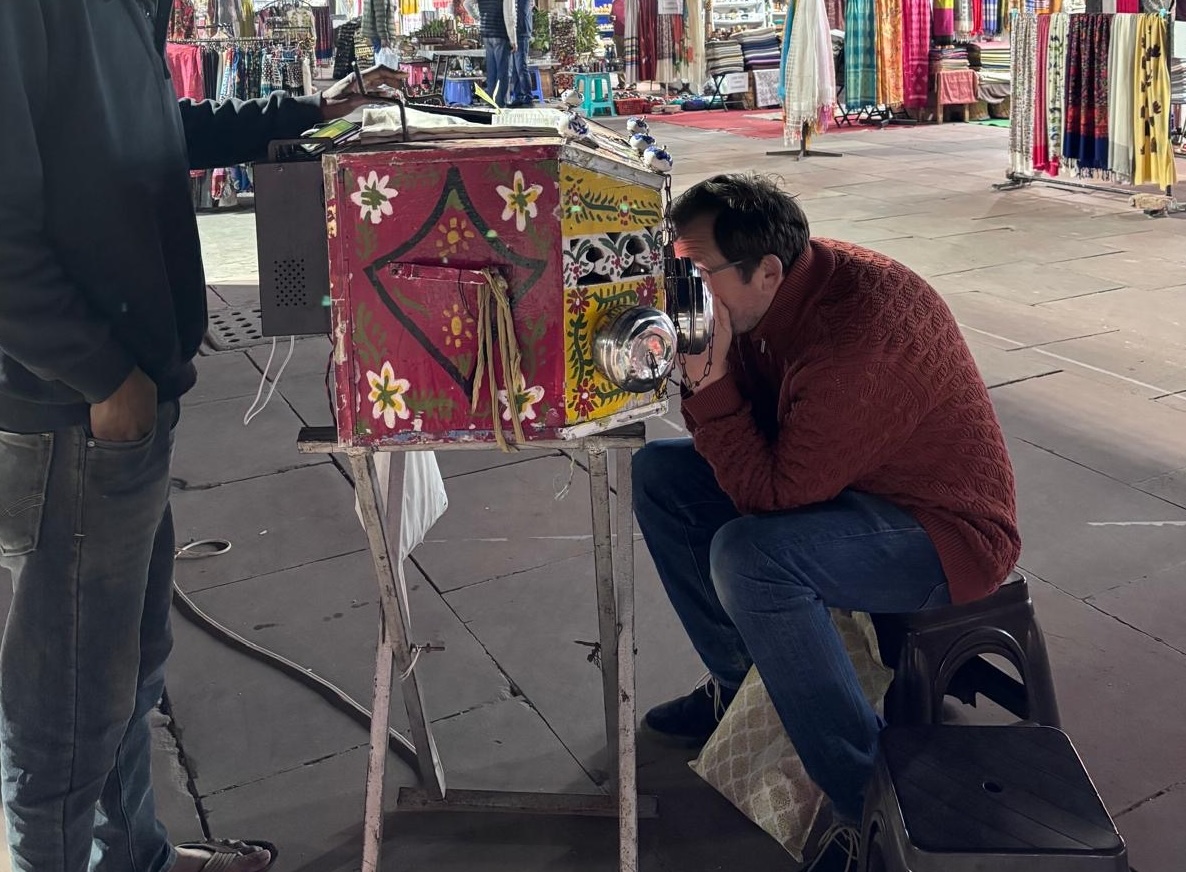
    Moment-of-discovery channel

    May 8, 2025

    How the exploration of prehistoric painted caves can also make great telly

    Archaeology is the most daring of sciences; what other discipline could have inspired Indiana Jones or Lara Croft? Action-heroism accompanies the transmission of finds from dig site to public sphere, and this is also an intrinsic aspect of any second-hand representations of cave ‘art’.

    The content below was originally paywalled.

    (Altamira was authenticated by a hardy catholic cleric. Lascaux was shot in colour by an intrepid photojournalist. Chauvet was visited by a small camera crew and a director not averse to play up the challenges of filming in 3D. It will be in the book!)

    BBC television presenter Steve Backshall on the other hand appears at first to be primarily a hero, and only secondarily a naturalist or a conservationist. In fact, he disavows titles like anthropologist or archaeologist, although he’s hardly ignorant of those fields either.

    In Episode 6 of his new series Expedition he goes in search of cave painting in a near impassable mountain range in Indonesian Borneo.

    The dangers are real: they share the river with salt water crocodiles, they share the cave with poisonous centipedes, and they share their blood with leeches. For nine long days they trek around a jungle and a limestone karst labyrinth where a broken ankle would result in death. They are beyond the range of mountain rescue, and it seems their satellite trackers have packed up. The camera operator slips and cuts his shin to the bone; any infection would be fatal here.

    Their nine day expedition, with no apparent guarantee of success (other than what you might anticipate via the redemptive magic of television) and descents into one or two caves where they find no ‘art’. Their ultimate goal is a cave that, nine days ago, was a mere rumour.

    Backshall is eventually visited by self-conscious heroism, more a-frighted by the supernatural than the snakes and spiders we usually see him toy with. “It’s very different, a very different cave,” he says, in grave tones, “it feels darker, more foreboding, more sinister in here”.

    Perhaps, so it seems, it is impossible to avoid any pleasure in the spooktacular once you get to see parietal works first hand.

    The crew are soon filling their boots with footage of hand prints some 40,000 years old. And on camera, madly enough, a UK media personality is the first to discover several significant parietal works on the regional frontline of prehistoric studies.

    He laughs breathlessly, a little too breathlessly; there are nerves in the face of this ancient graffiti which the camera lights will not dispel.

    Backshall’s finds are authenticated at once by Dr Prindi Setiawan, who is both the foremost expert on Indonesia’s prehistoric caves and the presenter’s wingman here. “Keep your eyes open!” says the presenter, as the team spreads out in the sinister environment. “Anything that looks like… art, give Pindi a shout”.

    There is this unscripted beat before the word ‘art’, which is revealing. It seems ’art’ is hardly the mot juste, even to somewhat rough-hewn explorers.

    Backshall’s occasional soliloquys are disarming, merely a few modest insights, on a limestone perch, with coffee mug in hand. Never mind the nerves we might have witnessed in the cave. For him, upon reflection it’s what anyone would have done.

    His most interesting observation is that an engraving of a bull would not have been recorded from life, but from memory. I would argue, conversely, that this televisual document that reaches its audience in living rooms across the UK, is a subsequent transplant with its own creativity and blindness.

    Whoever undertakes an expedition like this for whoever may be his/her/their client will bring home their biases along with their documents. It happens time and again.

    But it is rare to witness the discovery of parietal works, rarer still to find a moment like this slotted into the story arc of cookie cutter BBC documentary. In 45 minutes of easygoing television we hence learn that very ancient caves make great exploration-fodder, a source of only mild wonder, and, ultimately, reassuring TV.

    I’d recommend Expedition to anyone with iPlayer, but let these words be preparation, and be aware of the risks. Would love to hear from anyone else who’s managed to see Steve Backshall in action!

    Uncategorized

    Making drawings Under Fire

    April 9, 2025

    A review of contraband art by Palestinian artists trapped in Gaza

    Pomegranate seeds have been split by thumbnail to squirt a blood-like dye across the page. Coarse paper bags, once packaging stomach medicine, have been overlaid with sketches. Drawings fill ruled school books, all issued by UNRWA (the United Nations Relief and Works Agency). Colour is minmimal. Images are sketchy. These features do not seem to be conceptual decisions; perhaps they instead arise from stark limits to making work under bombardment in a country that is being wiped off the map.

    Under Fire is a recent group show we saw at Darat al Funun in Amman, Jordan. It brought together four artists who (still) live in Palestine, which is really not that far away. These materials are hardly conceptual tools; they are rather the limited means by which desperate souls continue to work. Drawing no longer qualifies as a ‘practice’ for Basil al Maqousi, or Majed Shala, for Raed Issa or Sohail Salem. Drawing, to any artist who has lost home, studio and decades of artwork, is a lifeline and a last resort.

    The angular forms of camp tents provide a sharp, anxious, repetitive motif for Basil Al Maqousi. Fifteen of his expressionistic scenes hang in a crowded grid which leaves the viewer no exit from a sea of temporary shelters. You could suffocate in the choppy waves of ridgepoles and canvas. Close ups of inhabitants reveal a dense frontline of anguished faces. Women queue, hold heads in hands, stare at us with eyes that have seen too much.

    Using ballpoint pens in red, blue and black, Sohail Salem has worked up the pages of his exercise books, with indeterminate shading and detail that is no less intense. At times, in exhaustive compositions where the faces of individual subjects appear to dissolve, the atmosphere is claustrophobic. And yet he also draws surviving flowers, cacti, and palm trees: moments of relative peace in camps more isolating than those of Maqousi.

    A sense emerges from the show that, as a response to genocide, drawing has moved to occupy a different space from the video and/or photography captured by smartphones. The artist’s hand offers a better response to emotions like fury, grief, and despair. The works in Under Fire are not generally graphic or explicit. Civilian murders are absent; a blindfolded prisoner and tank which find their way onto a page of Salem’s notebook is a rarity. It appears is as if atrocities, in Gaza, as they appear daily on social media, cannot be added to in pen and paper by artists living on the front line.

    Raed Issa sets out to preserve life and portray his compatriots at rest and in reflective mood. His images of head-scarved women or men seated for discussion emerge with gentle shading from washes of makeshift paint or the blue and orange branding on the side of relief agency sacking. The artist’s work is warm, sad, but also insistent – you might say resilient. Portrait follows portrait. We get time with each sitter, enough to get to know these subjects with all their pain and the jeopardy of their future.

    Majed Shala, whose entire life’s work now lies under rubble, has returned to drawing as a way to escape, or so it seems. In a largely monochrome show he offers a limited amount of colour. Where his colleagues find desolation he has turned his attention to ongoing village scenes and the resilient vegetation in this region. Those who wish for artists to trade in aesthetics will understand Shala’s work at once, as he has plucked beauty from the maw of annihilation.

    While this show deals in the back-to-basic form of figurative drawing from life, it is knowingly put together. The works are notably uncommodified, usually untitled and presented in minimal black frames. There are explanatory notes, which just state the facts. A vitrine showcases Sohail Salem’s ruled pages. A smartphone film shows Raed Issa at work. And a bright red poster introducing you to the two room gallery space rests on an easel. The artists’ economy of form and subject matter is matched by the curator’s economy of means.

    In addition to this delicately-handled drawing show, Darat al Funun was, at the time of our visit, showcasing work of many other artists, who still make big, mixed-media, and oblique work. They include Lebanese artist Joe Namy, a Brazilian analogue film artist represented by the character Ж, plus a group show of contemporary works, all of which address the situation in Palestine. If to be a conceptual artist is to enjoy near total freedom, to be an artist in Palestine appears to entail compulsion to make work regardless of the situation. And yet perhaps it entails some freedom too: the freedom to pick up a pencil.

    This will have to serve, Under Fire suggests, until we have freedom for all.

    Under Fire closed on March 31 2025. Prof D, Little A and I visited in February.

    Uncategorized

    Noah Davis and the Imitation of Wealth

    April 5, 2025

    Reproductions proliferate to seal a twenty-first century artist’s reputation

    Noah Davis dropped out of college and completed his art education by studying works in books; he worked in the bookshop at MOCA in L.A. It was here he learned from the canon of commercial publishing. He hoovered up reproductions of a fine constellation of painters, that he would openly come to namecheck, both modern and contemporary.*

    In order to find his own themes, he turned to photography. Formerly, while a student, in 1975 his mother roamed the Southside of Chicago with a 35mm camera. He was to raid her archive. Then he found various other snapshots of everyday life in black America in flea markets. Davis painted life, in works all the more vivid and alive for being indirect. Somehow.

    Painterly influences and snapshot subjects are both on display at the Barbican right now, where a touring retrospective is establishing Davis as a true great with at least one major achievement to his name: as much as any other artist, he normalises the representation of African Americans in art: swimming, making music, crossing the street; drug and crime free; taking a break from civil rights marches. Black lives, matter of fact.

    Davis died sadly young. In 2015, at the age of 32 cancer claimed him just four years after he lost his father to the same illness. Who knows what else he might have achieved? The portrait here of Keven Davis is breath-catching: in Painting for my Dad (2011), a casually dressed but worn down subject, holding a storm lantern by his side, looks towards into a starry abyss which stretches out below. Co-curator Eleanor Nairne praises the capture here of ‘imminent grief’. That is true, and I’d add that mortality appears both mysterious and yet so tangible. Such an eloquent painting.

    This is a show in which art itself is equally ineffable and concrete. It is not clear how, for example, after an association with artist Dan Flavin, a strip light can accrue great market value. Davis pulls back the curtain on that magic trick by acquiring his own tubes of fluorescent lighting and calling it Imitation of Dan Flavin (2013). He does the same for Jeff Koons, On Kawara, Brancusi, Fred Sandback, Barnett Newman, Christo & Jean Claude, Robert Smithson, Donald Judd and Marcel Duchamp. And the cumulative effect is to complicate the facsimile works that resulted.

    You’d have to still be some kind of conjurer to stage this series of reproductions with the brio that Davis shows. On the evidence of a capsule display at the Barbican, his neon works are still urban, cool, and conceptual. His version of an early piece by Koons, a glass case containing an upright green Hoover, still commands a rush of consumer desire. His Imitation of Robert Smithson (2013), assembled in the corner of the gallery out of mirrors and sand still reflects and in this way deflects the critical gaze.

    The exhibits in Davis’s Imitation of Wealth series give clarity to their ideas, while questioning their materiality. ‘Imitation of Wealth’ was the inaugural exhibition of an ambitious community project by which the artist was to found a museum in the Los Angeles neighbourhood Arlington Heights. It was named the Underground Museum (2014) and was intended by the artist “to provide inner-city neighbourhoods with free access to world-class art.”

    As an American museum that was free to enter, containing works that would openly rip off the art market, conceived and operated as a non-profit resource for a primarily black audience, the UM was a bold, subversive, counterpoint to the way the art world is usually run. It was founded with money bequeathed to the artist, by Keven Davis, for the use of the wider community.

    It was a refurb rather than a white cube. Four adjacent buildings were found between 3006 and 3012 West Washington Boulevard (3506-12) and the dividing walls knocked through. It boasted a library, (books from the home of Davis and his wife Karon), a bar, a screening area, and a purple-themed garden – apparently an homage to Prince.

    By the time a publisher began to supply the library and MOCA began to loan bona fide artworks, these developments were not charitable gestures and more like the enrichment of a sound and already workable idea. The bookseller from MOCA had become the director of a reading room, gallery and civic institution with perhaps even more imaginative clout than his former workplace.

    In recognition that something special was afoot, MOCA was to restage the exhibition ‘Imitation of Wealth’ in 2015. On this occasion the pirate artworks were to cross the threshold of one of the very institutions which stood to otherwise prop up the value of the originals. This was both additional complication and conjurer’s flourish on behalf of Davis, his wife, and, presumably by this point, a team of collaborators. The landmark show opened on August 29 to clarity and mystery; the artist Noah Davis was to pass on the same day.

    You might say the recognition by MOCA closed a circle, or even a cycle of reproduction. Beginning with the colour prints in the museum bookstore, Davis was soon to build a democratic archive of amateur photographs. He faked the holdings of his own museum, and then loaned them back to the mainstream. Davis was, always, representing the art world, even as he represented quotidian black lives. He gave life to an entire community and he preserved those lives in paint, ensuring some degree of immortality for the way that he did so.

    *For the record, we are talking about Francis Bacon, Balthus, Georg Baselitz, Francesco Clemente, Giorgio de Chirico, Peter Doig, Marlene Dumas, Lucian Freud, Paul Klee, R. B. Kitaj, Édouard Manet, Kerry James Marshall, Noah Purifoy, Neo Rauch, Odilon Redon, Daniel Richter, Christian Schad, Eugen Schönebeck, Henry Taylor, Luc Tuymans. At least Davis was talking about them.

    literature, Uncategorized

    Creation Lake (2024) by Rachel Kushner

    March 24, 2025

    Rachel Kushner writes literary fiction that almost turns the pages for you. It is that engrossing. Her latest novel, Creation Lake, revolves around a reclusive intellectual who, having left civilisation behind to live in a cave, emerges now and again to send philosophical emails to a group of nearby acolytes. Could probably have his own Substack.

    Named Bruno Lacombe, he fits the mould of a number of French intellectuals, one key difference being his living arrangements and the mournful faith he shows in our Neanderthal past. Lacombe is so fond of these distant relatives of ours that he affectionately calls them Thals and he gives an account of the interbreeding which has furnished many of us with a mix of early hominid DNA.

    Due to the total darkness of his environment, Lacombe has trained himself to listen back through the ages. He claims to hear the Thal speak, during sojourns in the cave, and it is easy to believe that, when undergone for days on end, visual deprivation can lead to all manner of hallucinations and intuitions. Enticing both narrator and reader along, this speculative philosopher is able to hear the voices of multitudes on ‘cave frequencies’. 

    Lacombe’s travel is in a quite different direction from the new billionaire-driven space race; he has moved towards the centre of the earth. Kushner evokes the cave network as so extensive as to be almost un-mappable. It is inner space. Her novel is a manifesto for this journey inwards. Her cave ofers an uncertain promise to get us through these apocalyptic times.

    The narrator of Creation Lake, Sadie, is hardly to be trusted mind you. She herself is engaged in corporate espionage against Lacombe’s neighbours. These so-called Moulinards have gathered as a progressive back-to-the-land commune, and are campaigning against coming efforts by big business to drain the water basin and shift the local economy away from local farmers and into the hands of Sadie’s paymasters. 

    Readers will be torn between their ecological ideals (we share them, right?) and the mild tension implicit in our understanding of the narrator’s aims. Her own sympathies, in turn, as an avid reader of Lacombe’s emails (she has his account hacked), tends towards a complication, doubt, and a softening of her own fairly apolitical position. 

    Not that she deviates from her mission. She has a job to do. She is an agent provocateur. She steers the activists in a violent direction as per her brief. And she gets involved, as spycops are wont to do, sleeping with commune members, seeking out Lacombe. 

    But as she does so she becomes drawn towards extinct peoples: not just the Thals but the historic local population of Cagots, who come across as noble savages to compare to the Thal, ie; not really savages at all.

    Creation Lake is comic at times with a poised tone that delivers diamond sharp sentences that resonate in the darkness. Kushner describes things with great vividness, whether describing the timeless mood of a provincial village bar, al fresco lakeside sex, or the intrigue-filled atmosphere of the commune. 

    With the weaponry and communications at her disposal, the ruthless way in which she operates, and, somehow, her taste for beer, Sadie has a grit which appeals. This edge translates into many passages of prose which offer zero degree coolness in a way that both Don Delillo and Bret Easton Ellis have done in the past; the are in the same firmament as Kushner.

    Like The Flame Throwers and The Mars Room before it, Creation Lake is composed of juxtaposed environments. Between those three novels, Kushner has taken us into the Manhattan art scene, a riot in Rome, a California state women’s prison, an L.A. lapdancing club, a drag race camp in Nevada, agrarian France, and here, of course, a commune for post-1968 social organisers. 

    The narrative appears to grow scene by scene. The plotting has been overstated in one or two of the blurbs on this book. Creation Lake is no thriller. But it remains immersive and compelling. 

    Fiction has a way of proposing indelible arguments with no need of evidence. Creation Lake leaves the reader with an impression of parietal works which functioned as stars maps, and impression of ancient, primitive sailors who navigate vast oceans in darkness.

    That is a digression which stays with me. this book furnished me with a deeper feel for the depths of the earth and the depths of our past. It is fiction to create astonishment, transport us around in space and time, and offer fresh wonder at our prehistoric past.

    Creation Lake is published by Vintage, pp.404

    Uncategorized

    On freedom in the Middle East

    March 6, 2025

    Gallery going in the capital of Jordan

    The threat level proved acceptable and we traveled from stable Brighton to the Middle East and I can report that Jordan is safe, laid back, accessible, friendly and calm. And I only got told to fuck off the once, crossing a road downtown in the capital Amman.

    You cannot blame the locals for this mildest expression of hostility. Britain supports, and arms, their neighbour, Israel. Out of a population of eleven and a half million, 70 percent of Jordanians are Palestinian. With my white face and blue jeans, my profile suggests I’d be blind to the war. In fact, I can hardly look away from the horror, so I can take a fuck off on the chin.

    We stayed in Jabal al-Luweibdeh with friends to whom I will always be grateful. They showed us an even better welcome than they show the neighbourhood strays. That’s a lot of welcome, because they feed these cats, name them, bring them inside and stroke them. They want to bring more cute cats home from restaurant car parks, and why not – the cats are very lovely, but that’s another story.

    Their neighbourhood is beautiful, and the coffee machine was at our disposal. It was sunny, and we were just a street away from the Jordan National Museum of Fine Arts. So I arrive there on day two and the card reader is broken. It is seven Jordanian Dinar to get in (about £8), I have no cash and the security guard speaks no English. He took me to see his office-bound colleague who listened to me claim to be a journalist and let me in without charge.

    The experience of this many-pictured space was to build in enjoyment, floor by floor, as I got used to the refreshing absence of familiar names, schools, isms and the many other clues which might grace a Tate or a Guggenheim. Being so ignorant of so many artists from across the Levant, the Gulf and even South Asia, I was at least at a liberty to form my own impressions.

    In this respect it was a morning off from criticking. More tourist than journalist, I had the tourist’s greedy appreciation of having a whole museum almost entirely to myself. I could therefore entertain a liking for likeness, a love of colour, a feel for the drama of brush strokes, which are different from cat strokes but can also make the viewer purr at times.

    My time was limited so my hubristic survey of art from the global south was only able to reach a few conclusions: as many geniuses have lived here as have lived in Paris or New York; one finds that painters and sculptors took minimal ideas from the west, a poor trade for the assets the west has stolen; and pictorial appeal is lasting appeal.

    As an example of that reactionary dictum, there was a work called The Wooden Cage Maker, in which the very frame itself looked terribly constrictive. Egyptian artist Inji Efflatoun has captured our gaze here with a long-limbed, squatting figure who ably fills the plane: giving me the conundrum of a cage maker within a cage, making cages – any one of which could lock us away We become for him (and her) just chickens or rabbits in the face of a powerful artisan, whose axes are within dangerous reach.

    To discover this many newly built cages, wooden and hand crafted as they are, in the midst of a museum, in a national collection, of course brought to mind various cages which we might fashion in order to lock up, or nail down, the reception of works of art. Western styles may be followed to order, but inspiration will always slip through the bars.

    It is a liberating realisation. Art takes flight as the cages stack up. Another piece, on another floor, Freedom, offered a counterweight to Efflatoun’s cage maker. Jordanian artist Mai Qaddoura offers an installation from some 45 pairs of gypsum-white hands, hung from the ceiling in an arrangement not unlike Pascal’s triangle. All hands make the time-honoured gesture for fluttering wings and, by some magic of art, their avian shadows escape all bounds.

    Later that day we visited the Citadel, a complex of Roman ruins atop Jebel Al-Qal’a. As I looked across the valley at the adjacent sprawl of sand-coloured apartments and offices I saw the scene as an array of wares stacked in a cage maker’s yard. But in the wide air between us was a local flock of doves, murmurating against a blue sky. And the sky was already vibrating with an extended, musical and very loud call to prayer. Religion, depending on your viewpoint, is a prison or a release.

    In the ruins of a temple, stray cats roamed here too, utterly free.