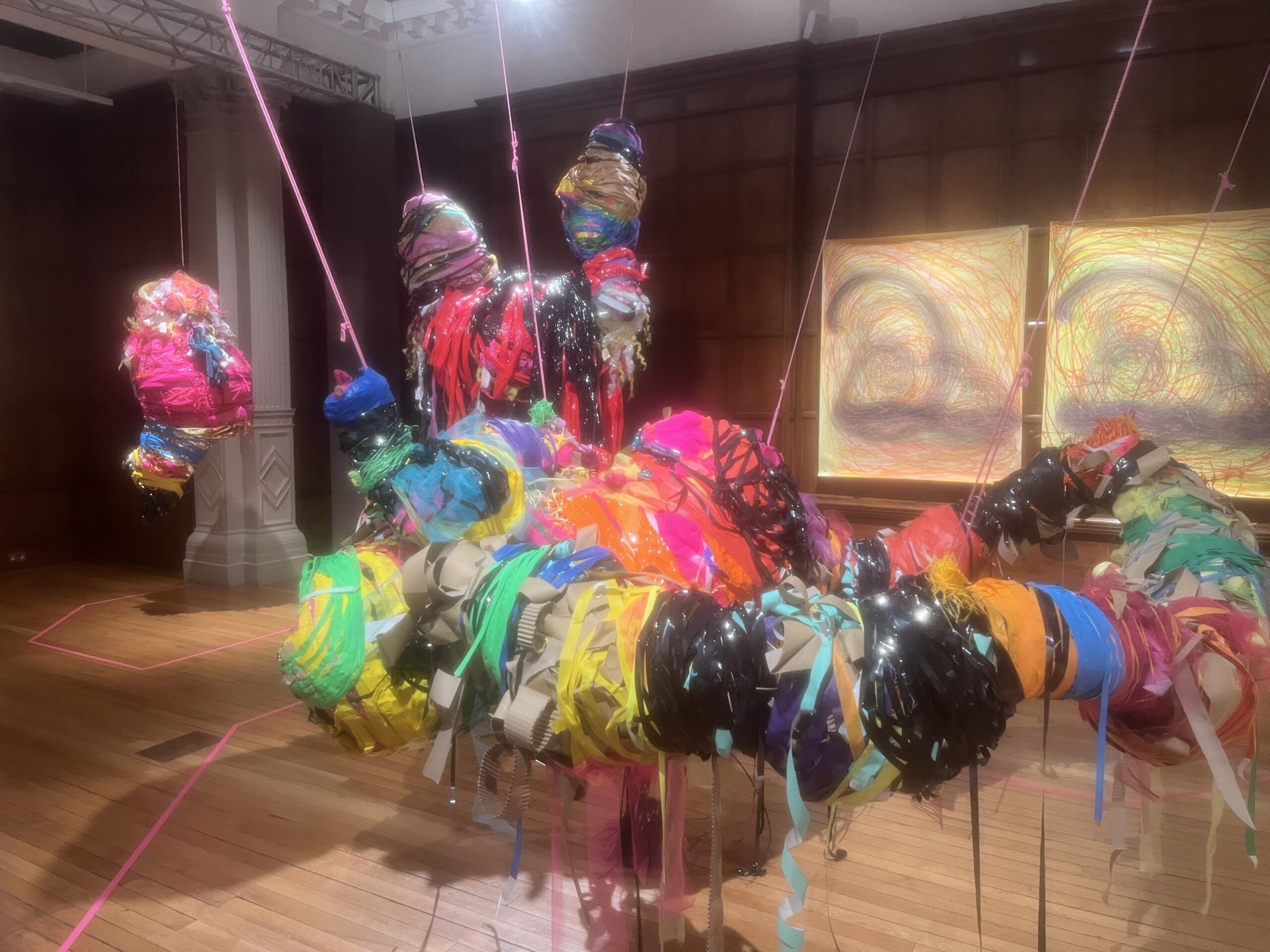
Protests around the Turner Prize, even if they have run out of steam in recent years, will have been put to bed last night, as the Prize went to Nnena Kalu. No one can really object to it. It is an event so cheering, it is strange to recall that this is the event that has been picketed by Stuckists, decried by Culture Ministers and jeered at by tabloids.
Art world insiders and the interested public alike have thrilled to Kalu’s work on display at Cartwright Hall in Bradford, where the Prize exhibition was held this year. The complexity is all in its form and colour. The ideas are not in the conceptual scaffolding or the artist’s written statement. Her show bypasses that.
But caution is needed. Kalu’s learning disability is not a fetish or a fad. And in a year when identity politics came to the fore, since all the contenders could claim marginality, the winning artist had nothing verbal to say about her own position vis-à-vis neurodivergence, race, gender or sexuality.
However, it bears repeating that Kalu is the first artist from a supported studio to win the prize. Kalu is the first such artist to even get near the shortlist. Having come to the jury’s attention, her energy must have swept them away.
And so this is the year that an unvocal artist with no formal training, but an unquestionable talent and a universalising aesthetic took the biggest prize in UK art. There’s plenty to say about that, inevitably, but none of it cause for protest.
I previously wrote about the artist’s inclusion in the shortlist for Disability Arts Online and you can read it here.

No Comments