<h1>Archives</h1>
    contemporary art, documentary

    Gillian Wearing, Self Made (2010)

    October 16, 2010
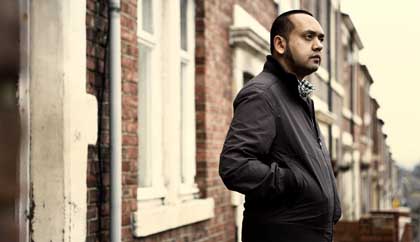
    Ash Akhtar plays himself in artist Gillian Wearing's first feature film

    Compared with art, film has a closer relation with truth. It was a spirit of scientific inquiry which drove the first experiments in taking a rapid succession of still photographs.

    Perhaps the best known pioneer of moving image is Eadweard Muybridge, whose work can now be seen at Tate Britain. Around 1878, by using multiple cameras, he recorded how horses gallop.

    Then there was Albert Londe who worked at the Salpêtrière Clinic in Paris. In 1893 he developed a 12 lens camera for recording fits of hysteria. His serial images were used in early psychiatry.

    More than a century later, cinema is still obsessed with both subjects. The action movie is the most bankable Hollywood genre. Psychoanalysis is still a mainstay for reading films.

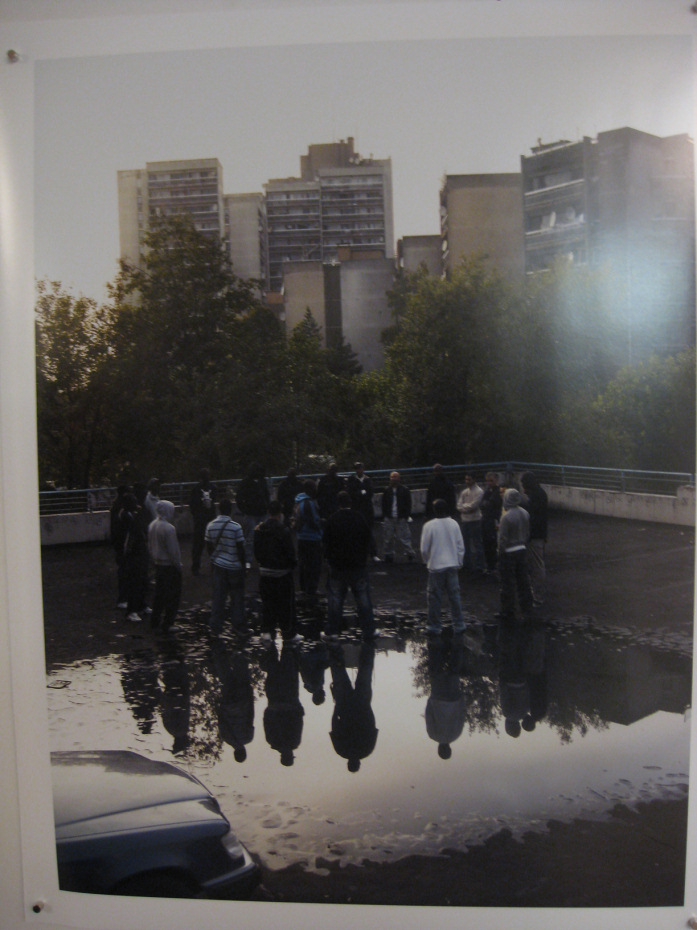
    Now artist Gillian Wearing has made a feature film which reveals as much truth as any other you are likely to see. Her documentary Self Made explores the psychology of seven non actors.

    Members of the public were invited to participate in a method acting workshop. The demonstrations of rage, despair, sorrow and alienation are as real as any found in a clinical report.

    Moments of action, which include a stabbing and an assault on a pregnant woman, are thankfully staged. But the film offers a real understanding of the emotional dynamic in such events.

    Of course cinema has its share of artifice and fantasy. Yet Self Made takes us back to the origins of the medium. It is a project of discovery which just happens to entertain.

    Self Made is showing at Vue West End, London, until 21 October: a few more details here. You can read an interview with Gillian Wearing in Time Out here.

    conceptual photography, contemporary art

    Dylan Thomas, Crash #2, Crash #1, Crash #3 (2010)

    October 10, 2010

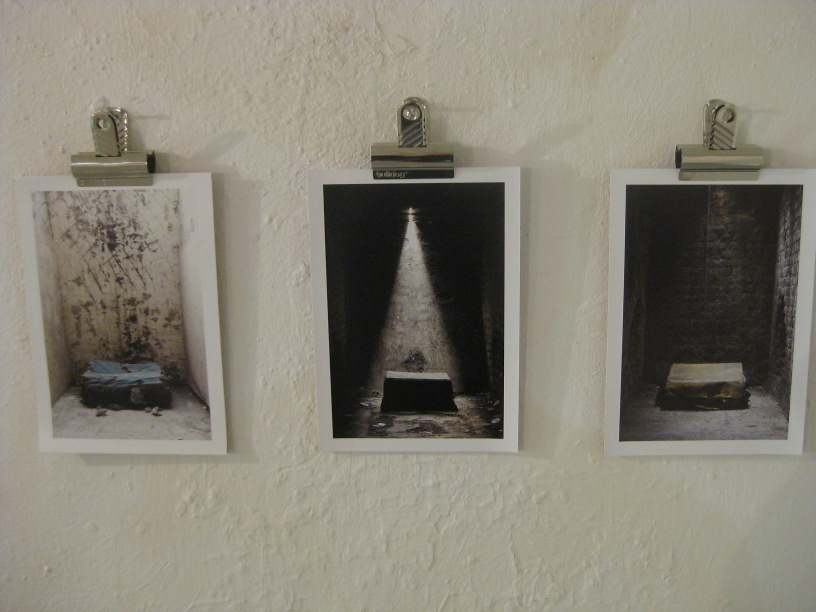
    If photos of anything, these are of altars. Beyond that it is difficult to say what we might be looking at. The titles suggest compacted blocks of wreckage with few other clues.

    One implication of the recessed alcove and the lighting in these shots is we might still come to worship at the indeterminate objects. These are staged shots with real presence.

    But the chapels are in a bad state of disrepair. So if a god of any sort be here, he is without a doubt “ill,” to quote this bleak poem in translation by César Vallejo.

    As for the altars, they look to have seen one sacrifice too many. The priesthood have given them up out of remorse. It was necessary to abandon them for some reason.

    And in architectural terms all three scenes bring us face to face with a dead end. The series is called Crash. It is hard not to think some disaster must have befallen this religion.

    The possibilities are numerous: World War I, World War II, World War III, or it may be a sad and simple case of a single road death.

    So this is wreckage after all, put forward for our contemplation in a gallery. It has strong aesthetic qualities, and that may be the worst part of it.

    The Crash series can be seen at Grey Area, Brighton, until 23 October 2010. It is part of Brighton Photo Fringe.

    contemporary art, documentary, film art

    Phil Collins, marxism today (prologue) (2010)

    October 7, 2010

    marxism today (prologue) is unelaborate art. If it was on TV you would think it a more or less ordinary documentary, with just one or two creative flourishes.

    Once, the voice of a presenter from East German TV is faded down and music is faded over the top. The track is a bittersweet instrumental in the mould of Stereolab.

    Music is again used towards the end of the film, where library footage is speeded up in a time lapse sequence. Here the shots are of a sports ceremony in the former GDR.

    Documentaries are not meant to bend the facts in this way. By adding these touches, artist Phil Collins offers strange feelings which go beyond the usual interest and empathy of the genre.

    He puts a contemporary spin on the past. The presenter’s words are of less interest now than his ambience. The socialist training regime of the athletes could do with some fast forward.

    Which brings us to the third arty flourish, a tangential title for the film. This is not about the past. The three former East Germans who are interviewed in it are still alive and well.

    Collins keeps his 10-minute prologue short. As the maker of a documentary, he cannot film the future. But as an artist, he can exhibit part of history and make it seem new.

    This film is showing as part of Phil Collins: marxism today at Cornerhouse, Manchester, until 28 November 2010.

    contemporary art, installation art, performance art

    Antti Laitinen, The Bark (2010)

    September 30, 2010

    Around the last corner of his show at A Foundation, you stumble upon this workshop of nature-loving Antti Laitinen. The scene is not filled with charm or wonder, but rather shock and horror.

    Something unexpected and industrial is going on. There are gas cylinders and what look to be tar bricks. Work has suddenly stopped, hence the volume of wood shavings on the floor.

    The boat looks crude. It would do. Its main constituent is bark from the floor of the forest in Finland where Laitinen lives. To make this vessel seaworthy is requiring some violence.

    A week after the show opened, the artist rowed this very boat up the River Mersey for three and a half hours. His trip combines elements of the magical and the manic.

    Perhaps all ecological statements need a little of either. Fairy-like, the trees shed their bark for our use. Termite-like, humans will work with whatever they can get.

    Other works in the show feature the artist digging a burrow into the soil and, apparently, eating ants off the end of a stick. More horror results, but you would have to call Laitinen a survivor.

    The Bark is a new commission by A Foundation and the Liverpool Biennial 2010 and can be seen in Laitinen’s show at the former until November 28 2010.

    You can read more about the artist on the blog Big Fat Failure or the artist’s own website. Here is also a film on YouTube about a previous 19-hour voyage he made in a bark boat.

    contemporary art, installation art, Uncategorized

    Will Kwan, Flame Test (2010)

    September 28, 2010

    Putting out the flags has become the most recognised gesture of welcome in every part of the world. Here we all are, they say, together in our differing categories.

    Seen all at once, they inspire optimism. All these national emblems will fit on the end of a flagpole or a world cup wallchart, so it stands to reason the countries themselves may co-exist.

    Indeed the 36 raised pennants on the outside of the Scandinavian Hotel flutter in the same breeze. On a sunny day, they look more or less the same.

    But the cosmopolitan mood soon darkens. The flags in Flame Test appear to be burning. On closer inspection you realise that each of these nations is guilty, and their guilt makes them distinct.

    Having been printed up from actual press agency photos, the installation brings home how much each of these countries is somewhere hated. It is hard to continue subscribing to the innocence of flags.

    Perhaps we would be better off without our categories, certainly we would be less likely to go to war. Burning one flag is an act of hate. Burning them all is surely an act of love.

    Flame Test can be seen at the former Scandinavian Hotel, Liverpool, until November 28 2010, as part of the Liverpool Biennial. For more details visit www.biennial.com.

    Uncategorized

    Liverpool Biennial/Alfredo Jaar/Wolfgang Tillmans/Jonathan Baldock

    September 26, 2010

    In case anyone is interested, here are some pieces written for Culture24 last week:

    And here is a music review written for News of the World:

    contemporary art, performance art

    Tehching Hsieh, One Year Performance 1980-1981 (1980-1981)

    September 23, 2010

    A man enters a room and punches a clock every hour on the hour for 365 days. It is like something from the Guinness Book of Records. The achievement is so athletic it transcends art.

    But there is nothing quirky or sporty about the current exhibition of Tehching Hsieh’s performance. More than 8,000 documentational photographs reveal an expression of unvarying seriousness. He wears a uniform. He does not cut his hair for a year.

    Owing to sleep and other factors, Hsieh misses just 1.52 clock-ins per day on average. The New York artist set out to achieve something both mad and surely maddening.

    By punching the clock with insane frequency he is raising the stakes in the system of labour relations. His performance is a frenzy. It threatens to break the machine, or at least you hope it will.

    No one can look at these timecards and these photos and not wish for some relief for the artist, and a bit of freedom for all those who work long or difficult hours.

    After one year, this record of suffering is all there is to show. But it can still be used, and, unlike our time, it cannot be taken away.

    There is an exhibition about One Year Performance 1980-1981 at FACT, Liverpool, until 28 November 2010. For more details see the gallery website. The show is part of Liverpool Biennial 2010.

    contemporary art, philosophy

    Alfredo Jaar, The Marx Lounge (2010)

    September 19, 2010

    You won’t find a more accommodating piece of art than The Marx Lounge. The sofas are as comfortable as they look. The walls are a warm shade of red. The light is perfect for reading.

    Then there are books. Some 1,500 paperbacks are stacked on a central table, which means the room is designed to fit the population of a medium sized village. Sofa space will be at a premium.

    By reading full time, it is just possible you could get through all the different titles in about five years, but the work is on display for around 10 weeks. Clearly this lounge is more extensive in both space and time than it might at first appear.

    The topics covered, from a broadly Marxist perspective, include economics, philosophy, history, psychoanalysis and above all politics. Alfredo Jaar has spoken of this as a “tsunami of thinking”, which has been taking place over the last 20 or 30 years.

    But everything about the place is an invitation to relax and let the theory sweep away everything in its path. This expansive lounge feels safe and well built, a good vantage point, or a place to soak it in.

    The Marx Lounge is part of Liverpool Biennial 2010: Touched, the International Exhibition. It can be found at 52 Renshaw Street until 28 Novermber 2010.

    contemporary art, photography, public art, social practice

    Isabella Niven, Most Days You Will See A Pigeon (2010)

    September 14, 2010

    The pigeon is an unlikely emblem of civic pride. They are not lions or liver birds. They confer no distinction. Even towns have them. Even some villages.

    But Milton Keynes is no ordinary place. Unlike most of the UK it is built on a grid system and the boulevards have numbers which reach into the hundreds. The car is king. Public life takes place in malls.

    So it comes as less of a surprise that a current art project in MK is using the humble pigeon to draw attention to the apparent normality of the oft derided new town.

    Residents have been invited to perch ceramic pigeons in a meaningful place and take a photograph. Here is Elizabeth Sabey’s contribution. The bird is on the prow of a second hand canoe she patched up over several months, all the while getting her own life back on track.

    It’s just an amateur photograph and short piece of text. By way of a plinth it had an exhibition stand in a shopping centre, and a more recently a corner in a one room gallery in Brighton. Grand, it ain’t.

    Moving, however, it is. It is clear hopes and dreams can take wing in Milton Keynes just as well as any other urban centre. Brightonians would do well to visit, and think twice next time they clap eyes on a pigeon.

    This project is a collaborative twinning of Milton Keynes and Brighton and can be seen at Two For The Show (Part I) at A&E Gallery, Brighton. See gallery website for opening times, and visit www.haveyouseenthispigeon.co.uk to view a few of the birds in situ.

    arts funding, contemporary sculpture

    Simon Morse: The Butler’s Cough, Grey Area

    September 12, 2010

    In a week artists have rallied round a David Shrigley animation and a petition against cuts to public funding, a show which seems to offer its own discreet protest opened at Grey Area.

    The Butler’s Cough by Simon Morse draws polite attention to a series of 12 customised control panels, such as you might find in an otherwise out of bounds area of a hospital, school or office.

    In real life these mysterious boxes control heating, lighting, power, etc. Well, that is a guess. The fact is few know exactly what they do and how they operate.

    Nevertheless, we understand they form an essential part of the infrastructure and we know they are not to be tampered with. So too with the arts.

    Even at the best of times, arts organisations are called upon to justify their expenditure and explain what they do. There is a certain type of person only convinced by economic arguments.

    And yet the real work of art is as invisible as these machines. It makes adjustments to settings in our consciousness, and in our hearts and souls, if you want to speak in those terms.

    This may be a digression from such witty and suggestive sculptures as the one in the photo above, which like a good butler has coughed and then faded once more into the background.

    The Butler’s Cough by Simon Morse is at Grey Area, Brighton, until26 September 2010. Visit the gallery website for opening times and check out the artist’s website for more images.